The Forbidden Fruit
Genesis 3:6-7
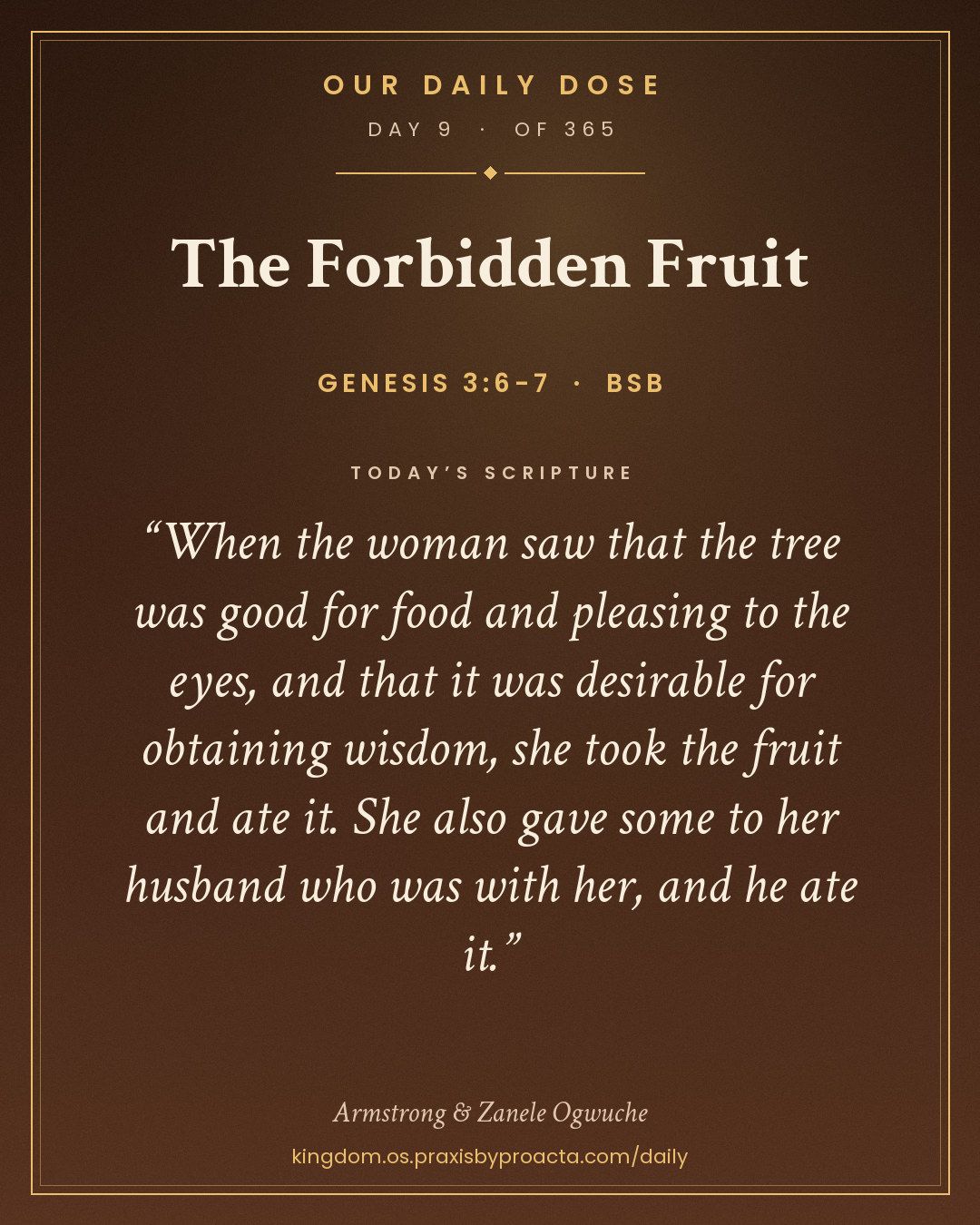
Scripture · Genesis 3:6-7
Berean Standard Bible (BSB), public domain.
The narrative quickly progresses to the pivotal moment of disobedience. Eve, seeing that the fruit of the forbidden tree was good for food, pleasing to the eye, and desirable for gaining wisdom, took some and ate it. She also gave some to her husband, Adam, who was with her, and he ate it as well (Genesis 3:6). This act of disobedience was not merely about eating a piece of fruit; it represented a willful decision to defy God’s explicit command. The description of the fruit as desirable in multiple ways underscores the multifaceted nature of temptation. Sin often presents itself as something good, appealing to our physical needs, aesthetic senses, and intellectual desires. However, the immediate consequence of eating the fruit was the opening of Adam and Eve’s eyes to their nakedness, leading to shame and the first experience of guilt (Genesis 3:7). This stark contrast between the allure of sin and its aftermath serves as a warning about the true nature of disobedience—it promises satisfaction but delivers shame and separation from God. Reflection and Application: This passage challenges us to examine the temptations we face in our own lives. We must be vigilant, recognizing that sin often disguises itself as something desirable. When faced with choices, we should
seek God’s wisdom and guidance, resisting the urge to act on our immediate desires. We are also reminded of the importance of accountability, as Adam and Eve’s mutual participation in the sin illustrates the dangers of leading others into disobedience.
Points to remember
- Evaluate Desires Carefully: Not everything that appears desirable is beneficial. When faced with temptation, take time to evaluate your desires in light of God’s truth. Ask yourself whether your actions align with God’s will and whether they will lead to life or destruction.
- Acknowledge the Consequences of Sin: Understand that sin has real and immediate consequences, both spiritually and relationally. When you recognize sin in your life, address it quickly through confession and repentance to restore your relationship with God.
Read the full book in the KOS Library →
A daily devotional from KingdomOS. Share freely; every card links back here.