The Serpent’s Deception
Genesis 3:1-5
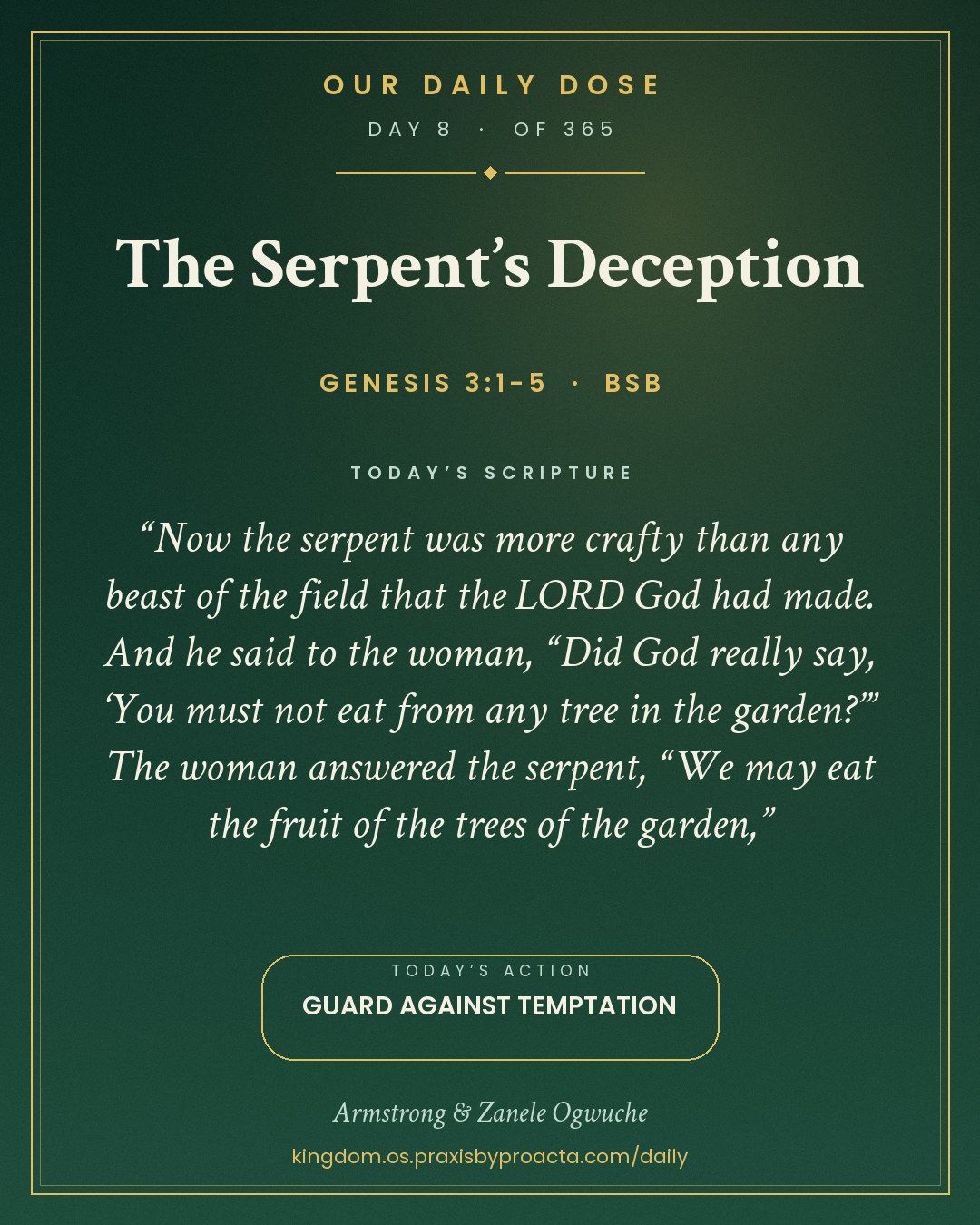
Scripture · Genesis 3:1-5
Berean Standard Bible (BSB), public domain.
Genesis 3 opens with the introduction of the serpent, a creature described as more cunning than any other animal. The serpent’s role in the narrative is to sow doubt and deception, leading Eve—and subsequently Adam—into sin. The serpent begins by questioning God’s command, subtly twisting His words to make them seem restrictive rather than protective. “Did God really say, ‘You must not eat from any tree in the garden’?” (Genesis 3:1), the serpent asks, planting the seeds of doubt in Eve’s mind. This deception reveals the nature of temptation: it often begins with questioning the goodness and truth of God’s word. The serpent’s tactic of distorting God’s command serves as a reminder of the importance of knowing Scripture accurately and thoroughly. It also highlights the dangers of engaging with temptation rather than fleeing from it, as Eve continues the conversation instead of rejecting the serpent’s lies outright. Reflection and Application: In our own lives, we often face similar tactics from the enemy—subtle distortions of truth that lead us to question God’s goodness and
commands. It is crucial to be grounded in Scripture, so we can recognize and resist these deceptions. When tempted, we must remember to stand firm in God’s word, trusting that His commands are for our protection and flourishing.
Deeper Revelations
- The Nature of Temptation: The nature of temptation, as demonstrated by the serpent’s approach to Eve in Genesis 3, reveals the subtlety and cunning often employed by the tempter. The serpent’s decision to approach Eve first, instead of Adam, plays into the dynamics of temptation. This was a deliberate act, as Eve might have been perceived as the more vulnerable or “weaker vessel” due to her secondary reception of God’s command, which was originally given to Adam. This strategic move by Satan highlights how temptation often targets perceived vulnerabilities within relationships or communities, particularly those who may not have the same level of direct experience or knowledge of God’s word.
- Distortion of God’s Word: In the dialogue between the serpent and Eve, we see a clear distortion of God’s word. The serpent begins by questioning God’s command in a seemingly innocent way, asking, “Did God really say, ‘You must not eat from any tree in the garden’?” This question is crafted to sow doubt in Eve’s mind about the clarity and fairness of God’s command. Satan exaggerates God’s restriction, making it appear more prohibitive than it actually was, thereby painting God as overly strict or unfair. This tactic is effective in shifting Eve’s perception, leading her to question the goodness and trustworthiness of God.
Moreover, as Eve engages in conversation with the serpent, she begins to misrepresent God’s command herself. She omits the freedom implied by God’s original words and instead adds restrictions that were never part of God’s command, like the prohibition against touching the fruit. This alteration shows how quickly misunderstanding and doubt can lead to a distorted view of God, which is often a precursor to disobedience. The serpent’s craftiness lies not just in direct lies, but in subtle manipulations that lead to a gradual but significant departure from the truth . This narrative serves as a profound warning about the importance of accurately knowing and understanding God’s word. It also underscores the need to be vigilant against subtle distortions that can lead to significant spiritual consequences.
Practical Applications
- Guard Against Temptation: Recognize that temptation often begins with subtle doubts about God’s goodness and truth. Strengthen your defenses by regularly studying and meditating on Scripture, so you can discern and resist the lies of the enemy.
- Stay Rooted in God’s Word: Ensure that your understanding of God’s Word is sound. Regularly engage in Bible study and seek wise counsel to avoid falling into the trap of distortion or misunderstanding.
Read the full book in the KOS Library →
A daily devotional from KingdomOS. Share freely; every card links back here.