Hannah’s Vow and God’s Response
1 Samuel 1:11-20
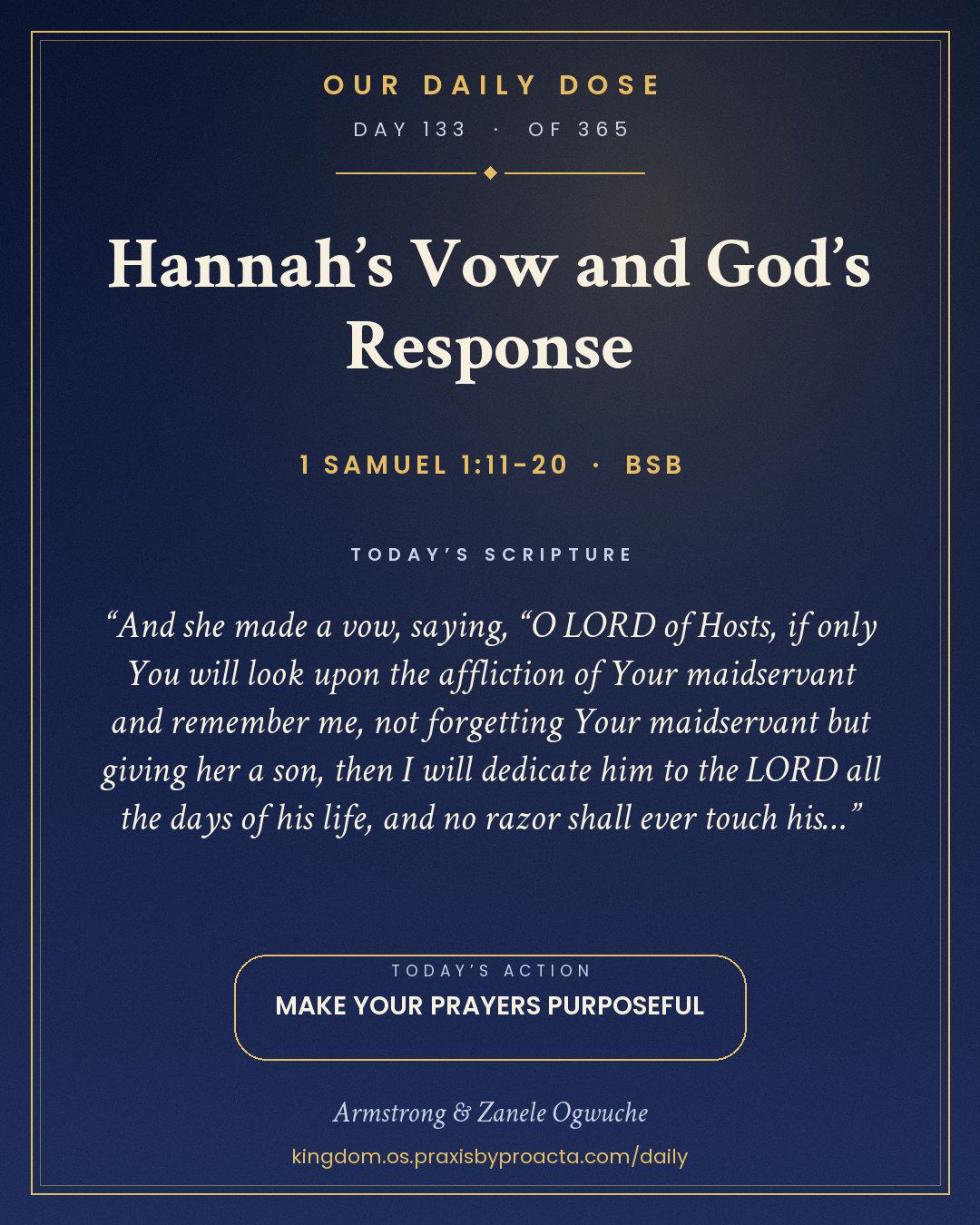
Scripture · 1 Samuel 1:11-20
Berean Standard Bible (BSB), public domain.
As Hannah prays, she makes a solemn vow to God: “And she made a vow, saying, ‘Lord Almighty, if you will only look on your servant’s misery and remember me, and not forget your servant but give her a son, then I will give him to the Lord for all the days of his life, and no razor will ever be used on his head’” (1 Samuel 1:11). This vow is significant, as it reflects Hannah’s willingness to dedicate her future child wholly to God. Eli, the priest, initially misunderstands Hannah’s fervent prayer, thinking she is drunk. However, upon hearing her explanation, Eli blesses her, saying, “Go in peace, and may the God of Israel grant you what you have asked of him” (1 Samuel 1:17). In response to her prayer and vow, God remembers Hannah, and she conceives and bears a son, whom she names Samuel, meaning “heard by God.”
Exegetical Viewpoints
- The Significance of the Vow: Hannah’s vow to dedicate her son to God is an extraordinary act of faith and devotion. It shows that her desire for a child is not self- centered but is rooted in a desire to honor God. By vowing to give her son back to God, Hannah demonstrates her trust in
God’s sovereignty and her willingness to place her deepest desires in His hands.
- God’s Faithfulness: The narrative highlights God’s faithfulness in responding to Hannah’s prayer. God “remembers” Hannah, not in the sense of previously forgetting her, but in the sense of taking action on her behalf. This response underscores the idea that God is attentive to the prayers of His people and that He acts according to His purposes and timing.
Practical Applications
- Make Your Prayers Purposeful: When you pray, consider the broader purposes of your requests. Like Hannah, align your desires with God’s will and be willing to dedicate the outcomes to His service. This mindset can transform your prayers from being solely about personal gain to being about the advancement of God’s kingdom.
- Trust in God’s Timing: When God answers prayer, it may not always be immediate or in the way we expect. Trust that God’s timing is perfect and that He remembers and responds to the cries of His people according to His divine plan.
Read the full book in the KOS Library →
A daily devotional from KingdomOS. Share freely; every card links back here.