Joseph’s Forgiveness and Reconciliation
Genesis 45:9-15
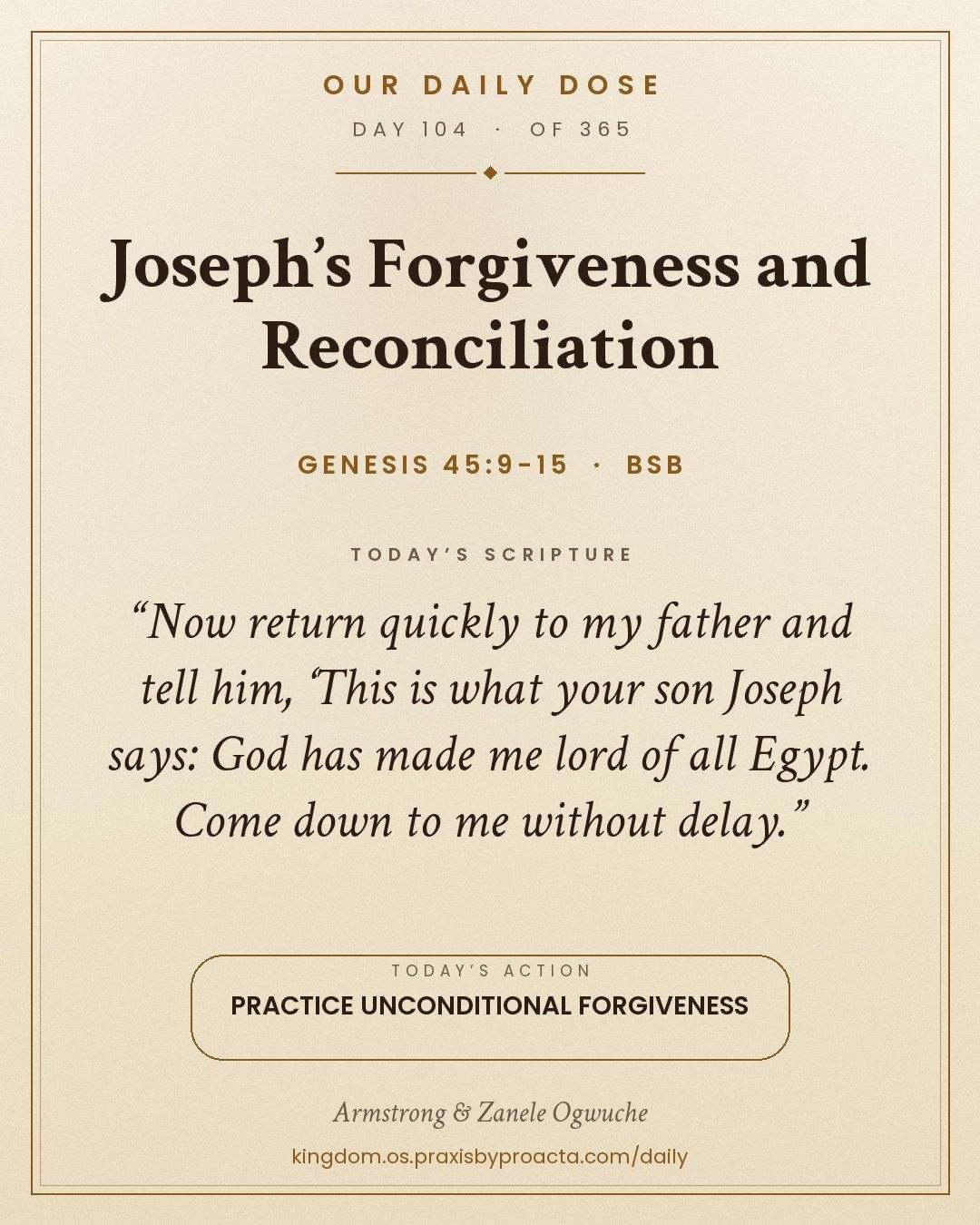
Scripture · Genesis 45:9-15
Berean Standard Bible (BSB), public domain.
After revealing his identity and reassuring his brothers, Joseph urges them to return to their father and bring him and their entire family to Egypt, where Joseph can provide for them during the remaining years of famine. He embraces his brothers, weeping with them, and the text notes that “afterwards his brothers talked with him” (Genesis 45:15). This moment of reconciliation is profound, as it marks the restoration of a broken family and the healing of old wounds. Joseph’s forgiveness is complete and unconditional. He does not hold a grudge, nor does he demand restitution from his brothers. Instead, he offers them the best of what he has and invites them into his life once again. This act of forgiveness not only restores the relationship between Joseph and his brothers but also secures the future of the entire family.
Exegetical Viewpoints
- Unconditional Forgiveness: Joseph’s forgiveness is notable for its lack of conditions. He does not demand an apology or restitution from his brothers but freely offers forgiveness and reconciliation. This mirrors the nature of divine forgiveness, which is offered freely to those who repent and seek reconciliation with God.
- Restorative Justice: Joseph’s approach to his brothers reflects the biblical principle of restorative justice, where the goal is not simply to punish wrongdoing but to restore relationships and communities. Joseph’s actions lead to the healing of his family and the preservation of life, demonstrating the power of forgiveness to bring about restoration.
Practical Applications
- Practice Unconditional Forgiveness: Strive to forgive others unconditionally, as Joseph did. Release any demands for restitution or retribution, and focus on restoring relationships and bringing healing to those who have wronged you.
- Seek Reconciliation: When possible, work towards reconciliation in relationships where forgiveness has been extended. Like Joseph, be willing to embrace those who have hurt you and take steps to restore trust and unity.
Read the full book in the KOS Library →
A daily devotional from KingdomOS. Share freely; every card links back here.