Joseph’s Perspective on His Suffering
Genesis 45:5-8
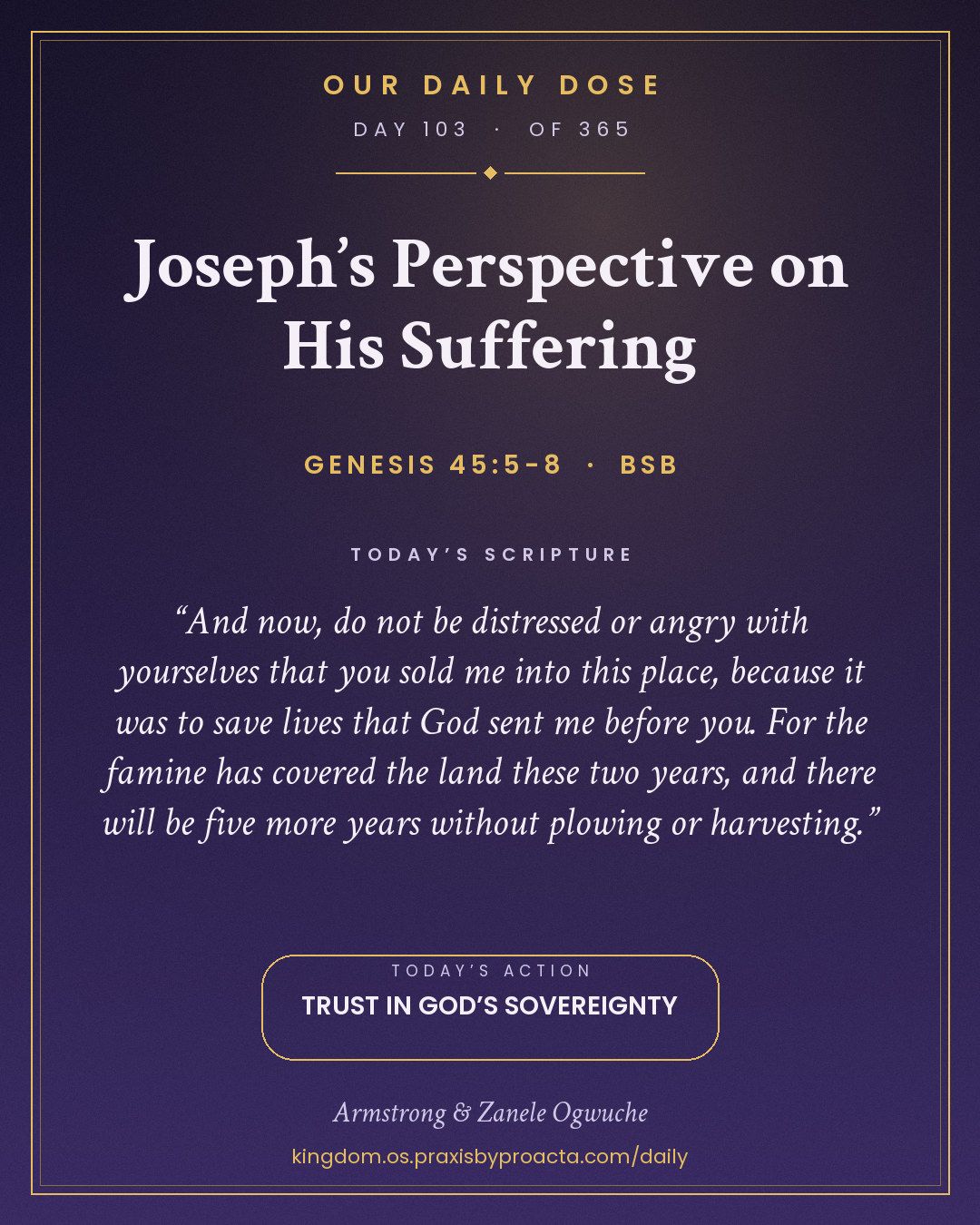
Scripture · Genesis 45:5-8
Berean Standard Bible (BSB), public domain.
In one of the most remarkable statements of faith and forgiveness in the Bible, Joseph tells his brothers not to be distressed or angry with themselves for selling him into slavery, “because it was to save lives that God sent me ahead of you” (Genesis 45:5). He continues, “So then, it was not you who sent me here, but God. He made me father to Pharaoh, lord of his entire household and ruler of all Egypt” (Genesis 45:8). Joseph’s ability to see God’s hand in his suffering is key to his ability to forgive. He recognizes that while his brothers intended harm, God had a greater plan that turned their evil actions into a means of preserving life. This perspective allows Joseph to release any bitterness and extend grace to his brothers.
Exegetical Viewpoints
- The Sovereignty of God: Joseph’s declaration that “it was not you who sent me here, but God” underscores the theme of divine sovereignty in the narrative. God’s providence is at work even in the darkest moments, orchestrating events according to His redemptive purposes. Joseph’s faith in God’s sovereignty enables him to forgive, as he sees his suffering as part of a larger plan for good.
- Forgiveness and Purpose: Joseph’s ability to forgive is directly linked to his understanding of purpose. He sees his suffering as purposeful, leading to the salvation of many lives. This purpose gives meaning to his pain and allows him to forgive those who caused it, recognizing that God used their actions for a greater good.
Practical Applications
- Trust in God’s Sovereignty: When wronged by others, seek to view the situation through the lens of God’s sovereignty. Trust that God can bring good out of even the most painful circumstances and allow this trust to free you from bitterness.
- Find Purpose in Pain: Reflect on how your own suffering might serve a greater purpose in God’s plan. By finding meaning in your pain, you can more easily forgive those who have hurt you and use your experiences to bring healing and hope to others.
Read the full book in the KOS Library →
A daily devotional from KingdomOS. Share freely; every card links back here.