Joseph Reveals His Identity
Genesis 45:1-4
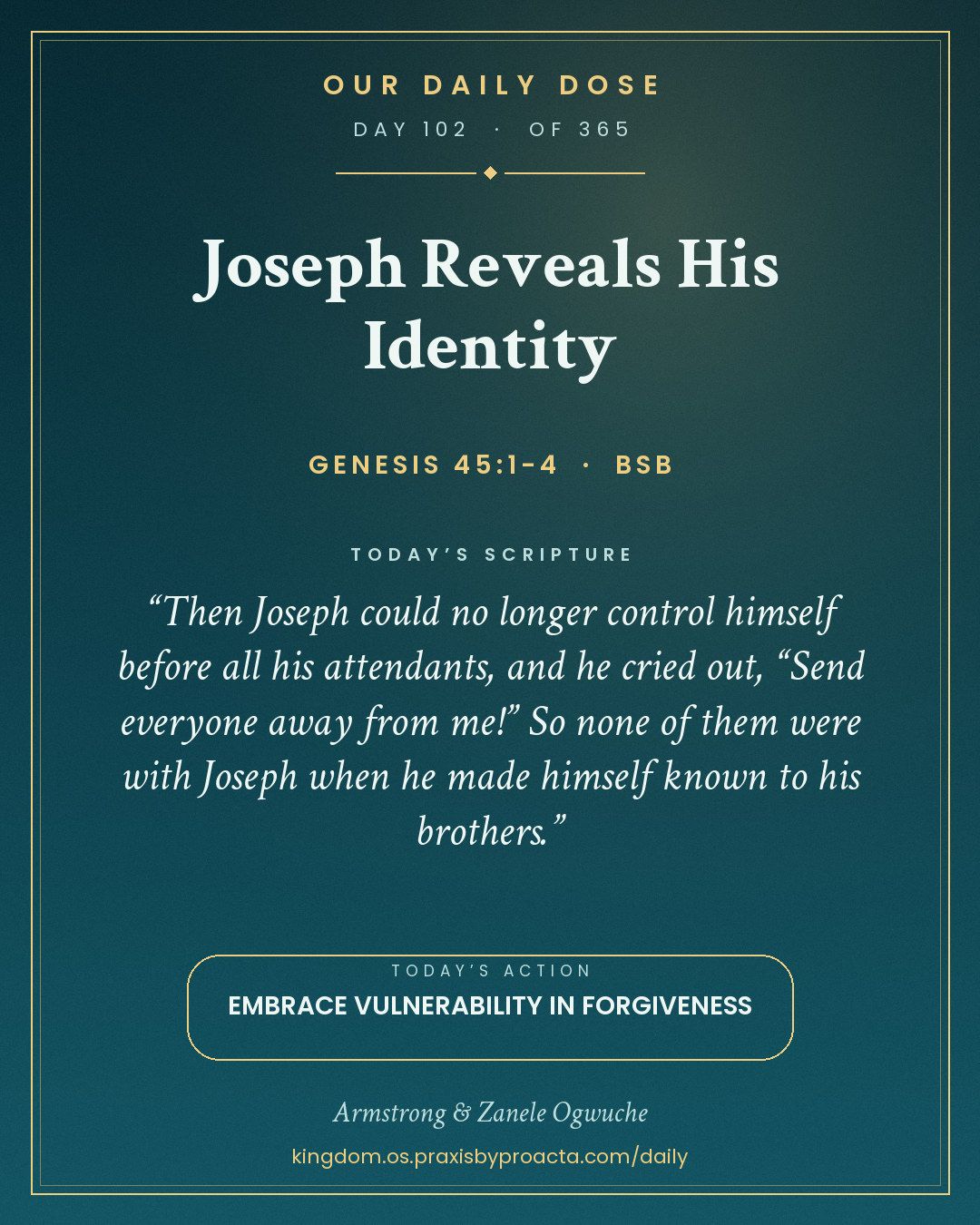
Scripture · Genesis 45:1-4
Berean Standard Bible (BSB), public domain.
In Genesis 45, the emotional climax of Joseph’s story unfolds. Overcome with emotion, Joseph orders everyone except his brothers to leave the room. He then reveals his identity to them, saying, “I am Joseph! Is my father still living?” (Genesis 45:3). His brothers are stunned and terrified, fearing that Joseph will seek revenge for the wrongs they committed against him. Joseph’s revelation is deeply moving, not only because it brings to light the truth of who he is but also because it opens the door for healing and reconciliation. Despite the power he holds, Joseph’s first concern is for the well-being of his father and his family, demonstrating that his heart is inclined towards forgiveness rather than retribution.
Exegetical Viewpoints
- The Power of Vulnerability: Joseph’s decision to reveal his identity is an act of vulnerability. By doing so, he risks reopening old wounds and exposing himself to potential rejection or further betrayal. However, this vulnerability is necessary for true reconciliation, as it allows for honest and open communication between him and his brothers.
- The Fear of Judgment: The brothers’ fear upon recognizing Joseph highlights a common human reaction when confronted with past wrongs—fear of judgment and punishment. This fear often hinders people from seeking reconciliation, as they dread the consequences of their actions being exposed.
Practical Applications
- Embrace Vulnerability in Forgiveness: Like Joseph, be willing to embrace vulnerability when seeking reconciliation. Forgiveness requires honesty and the courage to face past wounds, but it also opens the way for healing and restored relationships.
- Reassure Others in the Process of Forgiveness: When you are in a position to forgive, consider the fears and insecurities of those seeking forgiveness. Reassure them of your intentions and approach the situation with grace and compassion, helping to alleviate their fear of judgment.
Read the full book in the KOS Library →
A daily devotional from KingdomOS. Share freely; every card links back here.