God’s Revelation of His Character
Exodus 34:5-7
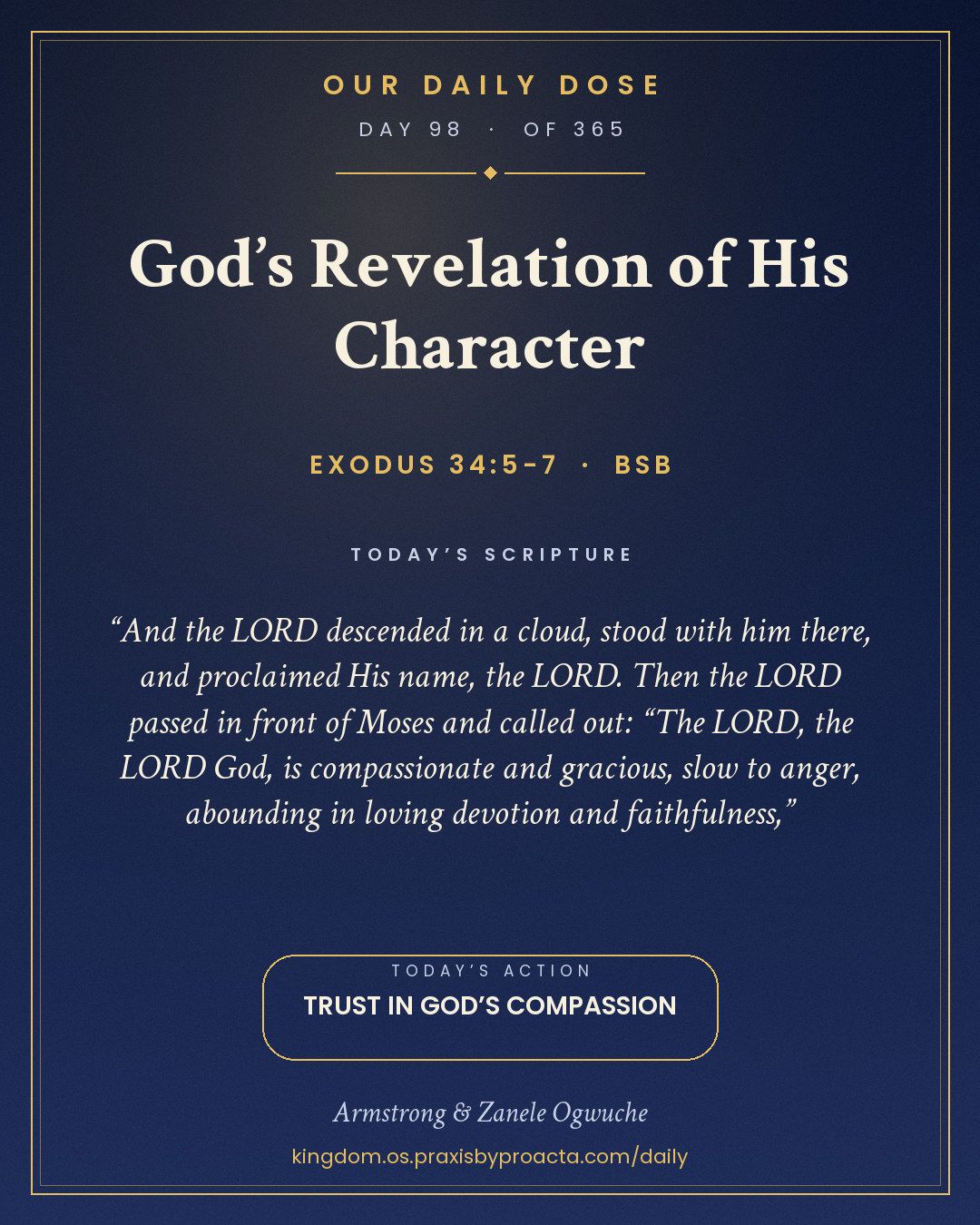
Scripture · Exodus 34:5-7
Berean Standard Bible (BSB), public domain.
As Moses stands on Mount Sinai with the new tablets, God passes before him and proclaims His name, revealing His character to Moses in one of the most significant self- disclosures in the Old Testament: “The Lord, the Lord, the compassionate and gracious God, slow to anger, abounding in love and faithfulness, maintaining love to thousands, and forgiving wickedness, rebellion and sin. Yet he does not leave the guilty unpunished; he punishes the children and their children for the sin of the parents to the third and fourth generation” (Exodus 34:6-7). This passage reveals the dual aspects of God’s character: His grace and compassion, and His justice. God is described as abounding in steadfast love and faithfulness, willing to forgive iniquity and sin. Yet, He is also a God of justice, who will not ignore sin and its consequences.
Exegetical Viewpoints
- God’s Compassion and Grace: The description of God as compassionate, gracious, and slow to anger emphasizes the central role of grace in His dealings with humanity. These attributes highlight God’s willingness to forgive and restore those who turn to Him, demonstrating that grace is not a New Testament innovation but a
fundamental aspect of God’s character from the beginning. God’s grace is manifest in His patient forbearance and His readiness to forgive those who repent.
- Grace and Justice: The passage also underscores the balance between God’s grace and His justice. While God is loving and forgiving, He is also just, and He does not overlook sin. This duality is crucial in understanding the fullness of God’s character: He is both merciful and righteous. His grace does not negate His justice, but rather, the two work together to bring about redemption and restoration for those who seek Him.
Practical Applications
- Trust in God’s Compassion: In times of failure or sin, remember that God is compassionate and gracious. Approach Him with confidence, knowing that He is ready to forgive and restore you, as long as you come to Him with a sincere heart.
- Acknowledge the Balance of Grace and Justice: Recognize that while God’s grace is freely given, it does not absolve us from the responsibility of living righteously. Strive to live in a way that honors both God’s grace and His justice, understanding that true faith involves both receiving God’s mercy and walking in obedience to His commands.
Read the full book in the KOS Library →
A daily devotional from KingdomOS. Share freely; every card links back here.