The Definition and Importance of Faith
Hebrews 11:1-6
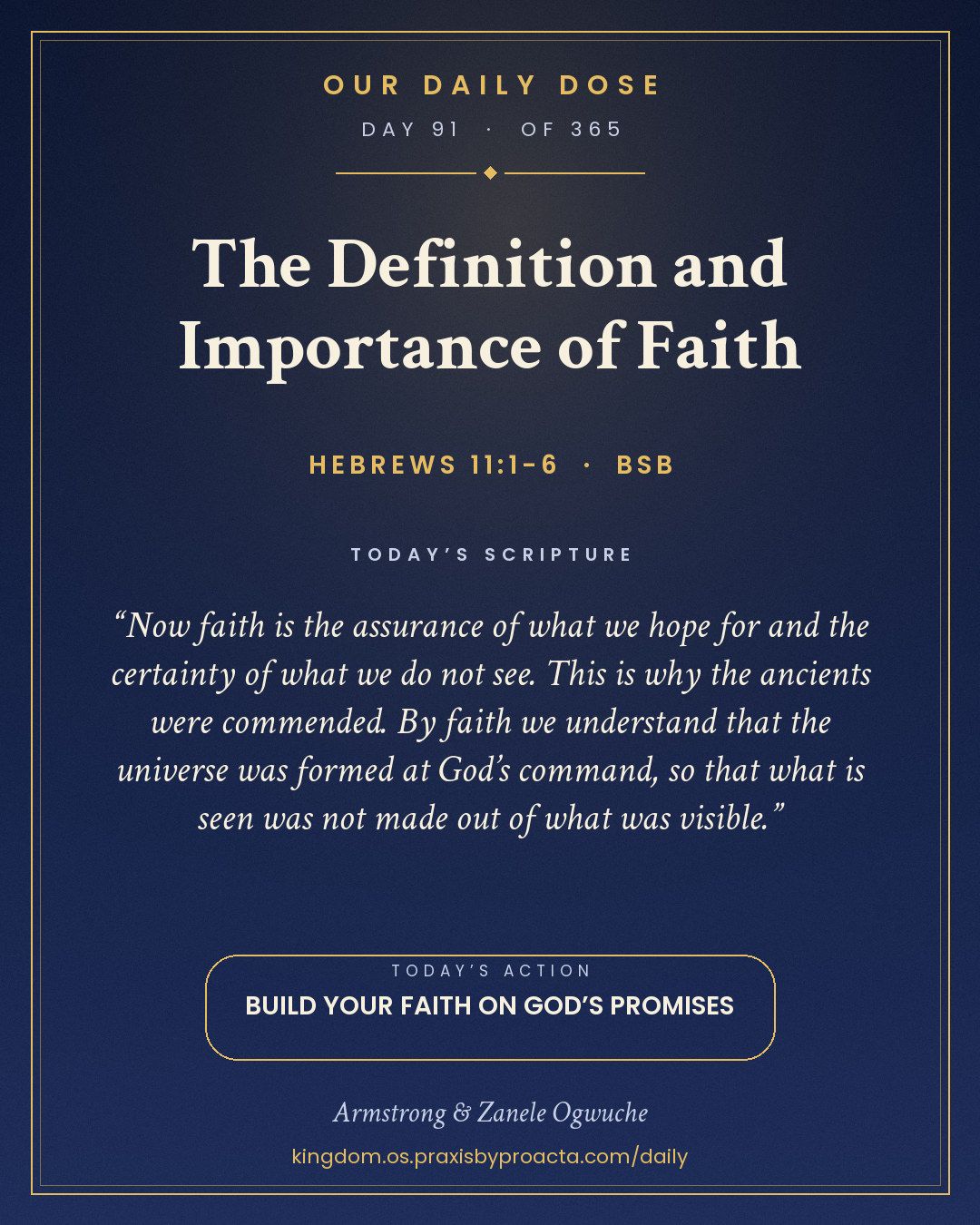
Scripture · Hebrews 11:1-6
Berean Standard Bible (BSB), public domain.
Hebrews 11 begins with a foundational definition of faith: “Now faith is confidence in what we hope for and assurance about what we do not see” (Hebrews 11:1). This verse captures the essence of biblical faith as both confidence in the promises of God and a conviction in the unseen realities of His kingdom. Faith, therefore, is not based on physical evidence but on the trustworthiness of God’s character and His word. The writer of Hebrews goes on to explain that it is by faith that the ancients were commended by God. This suggests that faith has always been the means by which people have been justified and found favor with God, long before the arrival of the New Testament. Hebrews 11:6 underscores the necessity of faith by stating, “And without faith it is impossible to please God, because anyone who comes to him must believe that he exists and that he rewards those who earnestly seek him.”
Exegetical Viewpoints
- Faith as Assurance and Conviction: The Greek words used in Hebrews 11:1, hypostasis (translated as “confidence” or “assurance”) and elegchos (translated as “conviction” or “evidence”), convey the idea that faith is the
foundation or underlying reality of what is hoped for, and it is the inner conviction of things not yet seen. This definition of faith challenges the modern understanding that often equates faith with wishful thinking. Instead, biblical faith is depicted as a solid and rational trust in the promises of God, grounded in His faithfulness.
- The Necessity of Faith: Hebrews 11:6 makes it clear that faith is essential for a relationship with God. Faith is not optional; it is the means by which we approach God and live in accordance with His will. This verse emphasizes two key elements of faith: belief in God’s existence and trust in His goodness—that He rewards those who seek Him.
Practical Applications
- Build Your Faith on God’s Promises: Strengthen your faith by immersing yourself in the promises of God found in Scripture. Trust in His character and His word, even when circumstances are difficult or when the fulfillment of His promises is not yet visible.
- Seek to Please God through Faith: Recognize that faith is the foundation of a life that pleases God. Focus on developing a faith that is both confident in God’s promises and persistent in seeking Him, trusting that He will reward your diligence.
Read the full book in the KOS Library →
A daily devotional from KingdomOS. Share freely; every card links back here.