The Encounter at Mount Horeb
1 Kings 19:9-18
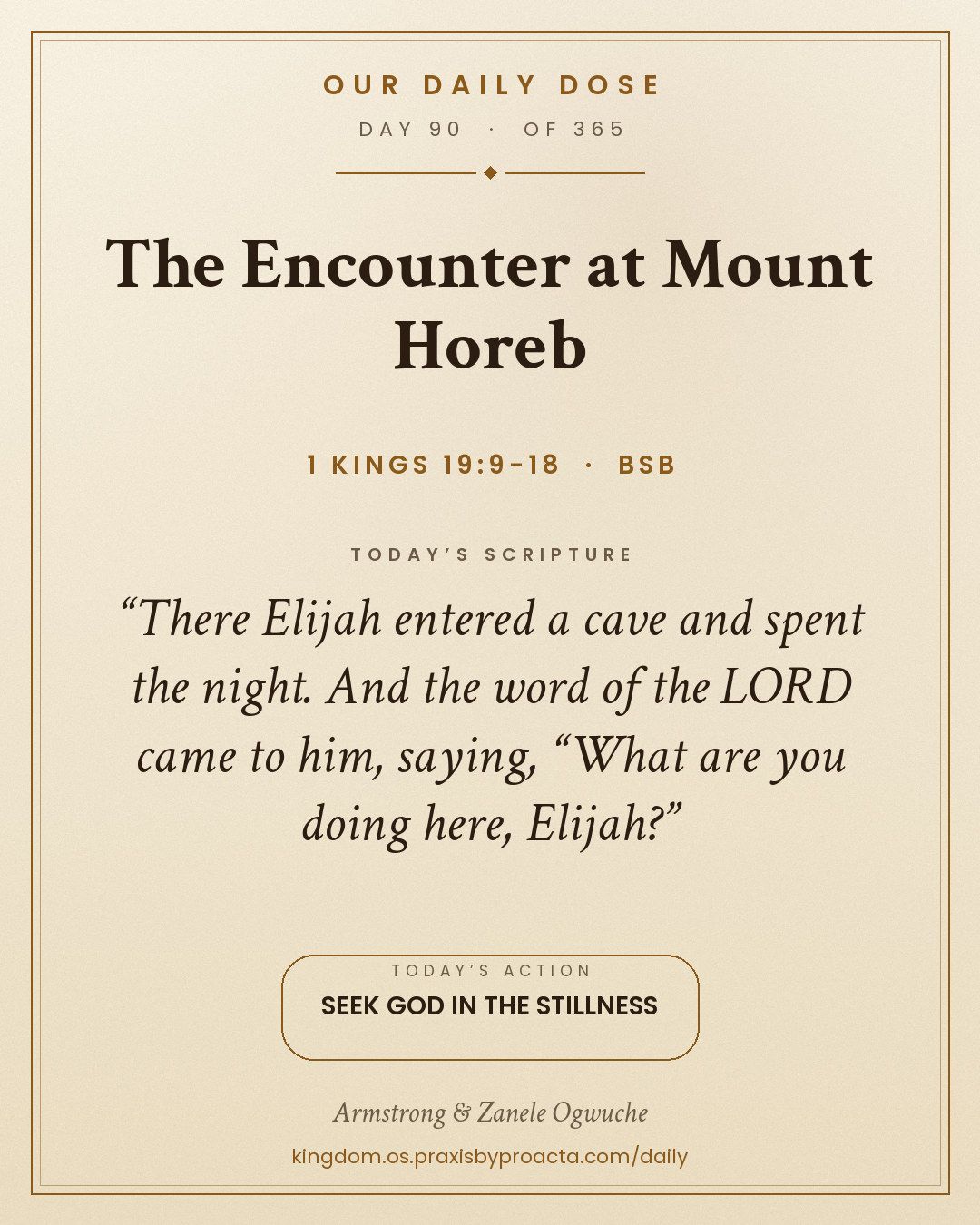
Scripture · 1 Kings 19:9-18
Berean Standard Bible (BSB), public domain.
Elijah’s journey leads him to Mount Horeb, also known as Mount Sinai, the same mountain where Moses received the Ten Commandments. Here, Elijah takes refuge in a cave, and God asks him, “What are you doing here, Elijah?” (1 Kings 19:9). Elijah expresses his feelings of isolation and failure, believing that he is the only faithful prophet left and that his efforts have been in vain. God instructs Elijah to stand on the mountain in the presence of the Lord, and what follows is a series of dramatic natural events: a powerful wind, an earthquake, and a fire. However, the Lord is not in any of these. After the fire, there is the sound of a gentle whisper, and it is in this still, small voice that Elijah encounters God. God then gives Elijah a new commission: to anoint Hazael as king over Aram, Jehu as king over Israel, and Elisha as his own successor. God also reassures Elijah that he is not alone —there are seven thousand in Israel who have not bowed to Baal.
Exegetical Viewpoints
- The Presence of God in the Stillness: The encounter at Horeb teaches us that God’s presence is not
always found in the dramatic or the powerful, but often in the quiet and the stillness. This is a significant lesson for Elijah, who had just witnessed God’s power in the fire at Mount Carmel but now encounters God in a gentle whisper. It’s a reminder that God’s ways are not always as we expect, and that He often speaks in subtle, quiet ways that require us to be still and attentive.
- Renewal and Commission: God’s gentle question, “What are you doing here, Elijah?” is not a rebuke but an invitation to self-reflection and renewal. Elijah is given a new commission and reassured that his work is not in vain. This encounter marks a turning point for Elijah, renewing his sense of purpose and strengthening his resolve to continue his prophetic mission.
Practical Applications
- Seek God in the Stillness: In your spiritual life, make space for silence and stillness, where you can be attentive to God’s gentle whisper. Don’t always look for God in the dramatic; often, He speaks in quiet, subtle ways that require a receptive heart.
- Embrace God’s Renewal: If you feel weary or disillusioned in your spiritual journey, take comfort in the fact that God offers renewal and a fresh sense of purpose. Like Elijah, be open to God’s new direction for your life and trust that He is still at work, even when you feel isolated or discouraged. Conclusion: Faith in the Prophets The story of Elijah in 1 Kings 17-18 is a powerful narrative of faith, obedience, and divine encounter. Through Elijah’s
life, we see the challenges and triumphs of prophetic ministry, marked by bold confrontations with idolatry, deep personal struggles, and intimate encounters with God. Elijah’s faith is characterized by unwavering trust in God’s power, persistent prayer, and a willingness to stand alone for the truth. As we reflect on Elijah’s journey, we are reminded that the life of faith is not without its challenges. There will be moments of spiritual fatigue, fear, and doubt, but through it all, God remains faithful, providing for our needs, speaking to us in the quiet moments, and renewing our strength for the journey ahead. May Elijah’s story inspire us to cultivate a deep and abiding faith, to trust in God’s provision and power, and to be attentive to His voice in every season of life. And may we, like Elijah, be willing to stand boldly for the truth, confident that God is with us and that His purposes will prevail.
Week 15: Day 91-93 New Testament Faith The concept of faith is central to the New Testament, shaping the life and belief of every Christian. Hebrews 11, often referred to as the “Faith Chapter,” stands as a profound exploration of what faith is and how it has been lived out by the saints throughout biblical history. This chapter serves as both a theological exposition on the nature of faith and a practical guide for believers, demonstrating that faith is not merely a mental assent to a set of beliefs, but a dynamic and active trust in God that impacts every aspect of life.
Read the full book in the KOS Library →
A daily devotional from KingdomOS. Share freely; every card links back here.