God’s Signs and Wonders
Exodus 4:1-9
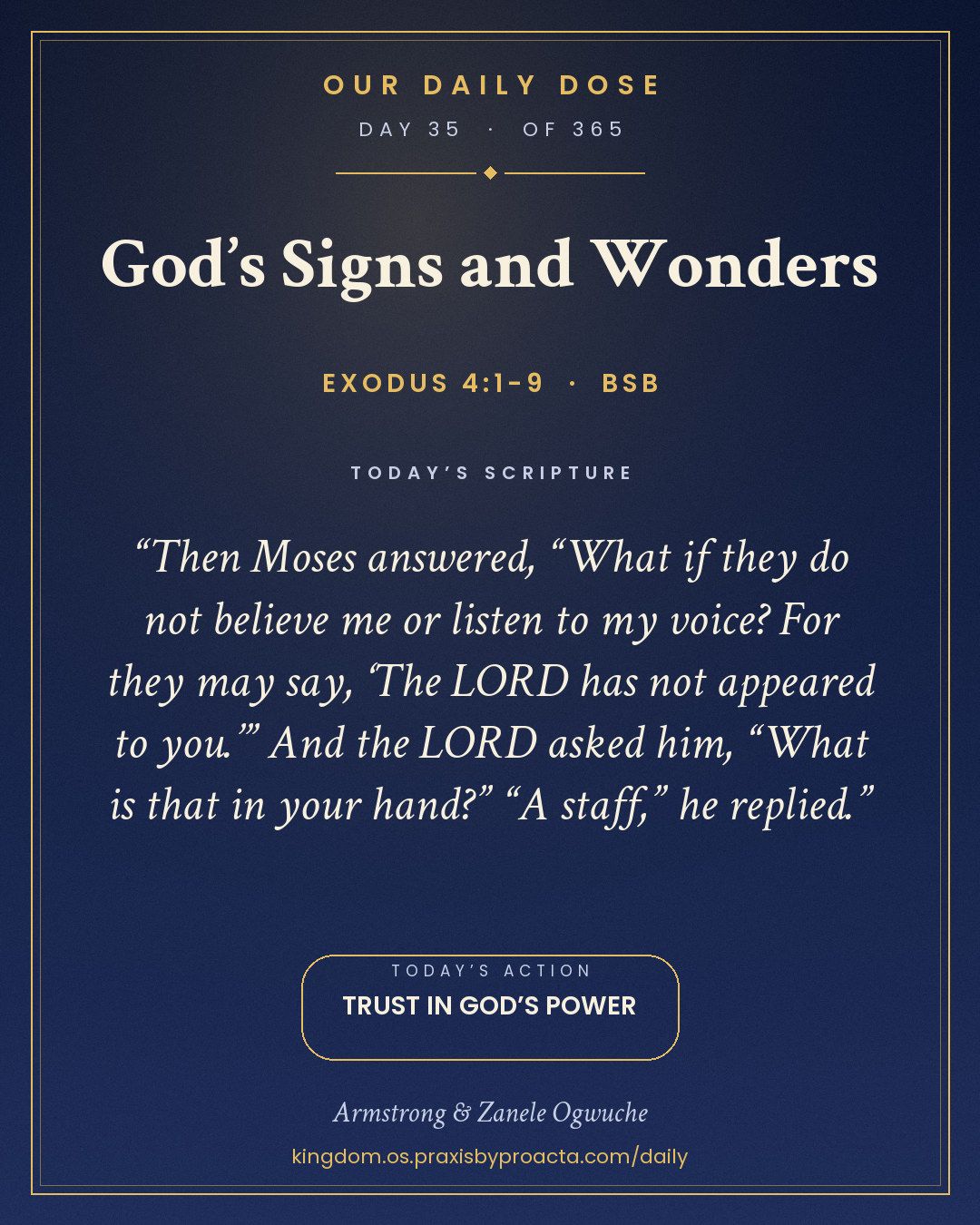
Scripture · Exodus 4:1-9
Berean Standard Bible (BSB), public domain.
In Exodus 4, God addresses Moses’ continued doubts by providing him with miraculous signs to demonstrate God’s power and to authenticate Moses’ mission. These signs include the transformation of Moses’ staff into a serpent, the turning of his hand leprous and then restoring it, and the turning of water from the Nile into blood. These signs are meant to convince the Israelites that God has truly sent Moses to deliver them. The signs and wonders that God performs through Moses are not just displays of power; they are tangible expressions of God’s commitment to His people. They serve as evidence that God is actively working on behalf of Israel and that He has the power to overcome any obstacles in their path.
Deeper Revelations
- God’s Power to Save: The signs given to Moses illustrate God’s sovereign power over creation and His ability to intervene in human history. They are a reminder that God is not limited by natural laws or human expectations—He is able to do the miraculous to accomplish His purposes.
- The Role of Signs in Faith: While signs and wonders can strengthen faith, they are ultimately secondary to the word and presence of God. The signs given to Moses
are meant to confirm God’s word and to lead the people to trust in God’s promises, not just in the miracles themselves.
Practical Applications
- Trust in God’s Power: When faced with challenges, remember that God has the power to work miracles on your behalf. While we may not always see dramatic signs, we can trust that God is at work in ways that may be beyond our understanding.
- Focus on God’s Word: While signs and wonders can be encouraging, remember that our faith is ultimately based on God’s word and His presence with us. Let the signs you do see—whether in Scripture or in your own life—lead you to a deeper trust in God’s promises.
Read the full book in the KOS Library →
A daily devotional from KingdomOS. Share freely; every card links back here.