The Burning Bush and God’s Call
Exodus 3:1-6
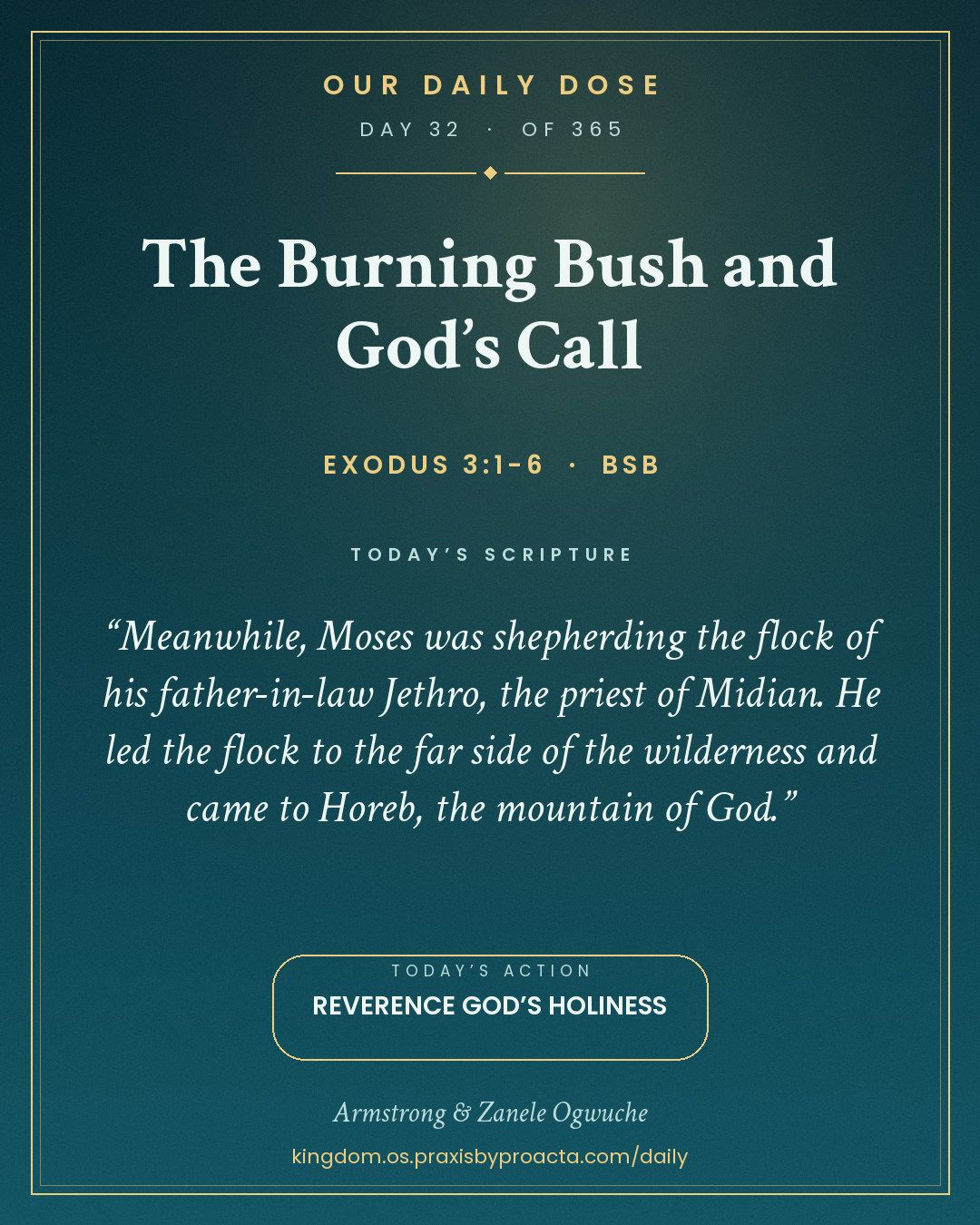
Scripture · Exodus 3:1-6
Berean Standard Bible (BSB), public domain.
The narrative in Exodus 3 begins with Moses tending the flock of his father-in-law, Jethro, in the wilderness of Midian. As he approaches Horeb, the mountain of God, Moses encounters a strange and miraculous sight—a bush that is burning yet is not consumed. This is the moment where God reveals Himself to Moses, calling him by name from the midst of the bush: “Moses, Moses!” Moses responds, “Here I am.” God then instructs him to remove his sandals, for he is standing on holy ground. God further identifies Himself as “the God of your father, the God of Abraham, the God of Isaac, and the God of Jacob” (Exodus 3:6). This encounter marks a turning point in Moses’ life and in the history of Israel. It is a moment of divine revelation where God makes His presence known in a powerful and personal way. The burning bush symbolizes God’s holiness and His ability to manifest His presence without being consumed by the natural world.
Deeper Revelations
- God’s Holiness and Presence: The burning bush is a vivid representation of God’s holiness. The fact that the bush is not consumed by the fire symbolizes God’s self-
sustaining nature and His power to be present in the world without being diminished by it. It also signifies that God’s presence is both awe-inspiring and approachable, as He calls Moses into a relationship with Him.
- Personal Call: God’s call to Moses by name indicates His personal knowledge of and relationship with those He chooses to serve Him. This personal call is a reflection of God’s love and His desire to engage directly with His people, not as distant beings but as individuals who are known and loved by Him.
Practical Applications
- Reverence God’s Holiness: The burning bush reminds us to approach God with reverence and awe, recognizing His holiness and the sacredness of His presence. Reflect on how you can cultivate a deeper sense of reverence for God in your daily life, especially in your times of worship and prayer.
- Respond to God’s Call: Like Moses, we are called by God to serve Him in specific ways. Consider how God may be calling you by name to a particular task or mission. Be open to His call and ready to respond with a willing heart, trusting in His guidance and provision.
Read the full book in the KOS Library →
A daily devotional from KingdomOS. Share freely; every card links back here.