Avoiding Conceit, Provocation, and Envy
Galatians 5:26
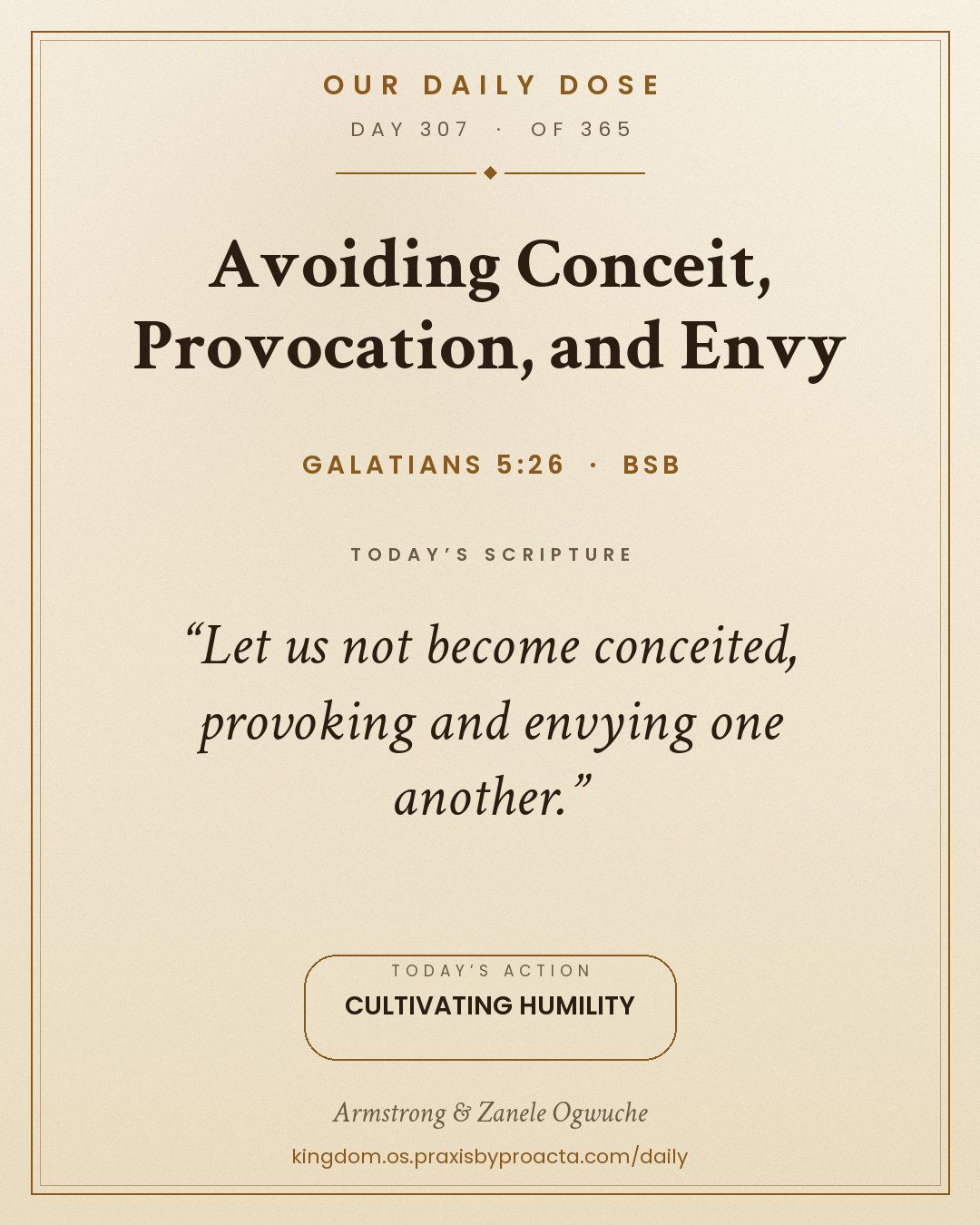
Scripture · Galatians 5:26
Berean Standard Bible (BSB), public domain.
Paul concludes this section with a warning against conceit, provocation, and envy—attitudes that can disrupt the unity and harmony within the body of Christ. These behaviors are contrary to the fruit of the Spirit and must be avoided by those who seek to live by the Spirit.
Exegesis and Study
- Avoiding Conceit: Conceit, or excessive pride in oneself, is a manifestation of the flesh and can lead to a sense of superiority over others. It is incompatible with the humility that the Spirit produces in us and can cause division and strife within the Church.
- Avoiding Provocation and Envy: Provoking others involves intentionally stirring up anger or resentment, while envy is the desire for what others have. Both attitudes are destructive and contrary to the love and peace that should characterize the body of Christ. Instead, we are called to encourage one another and to rejoice in the successes and blessings of others.
Practical Application
- Cultivating Humility: To avoid conceit, we must cultivate humility by recognizing that all we have—our gifts, talents, and achievements—comes from God. This involves giving God the glory for our successes and valuing others as equal members of the body of Christ.
- Promoting Unity and Contentment: To avoid provoking and envying others, we should focus on promoting unity within the Church and being content with what God has given us. This might involve celebrating others’ successes, offering encouragement, and being thankful for our own blessings.
Prayer Guide
- Pray for Humility: Ask God to help you cultivate a spirit of humility, recognizing that everything you have comes from Him. Pray for the ability to value others and to give God the glory for your successes.
- Pray for Unity and Contentment: Reflect on areas where you may struggle with provocation or envy. Pray for a heart that is content with God’s provision and that seeks to promote unity and encouragement within the body of Christ. Conclusion: Living by the Spirit and Exhibiting the Fruit of the Spirit Galatians 5:16-26 offers a clear and practical guide for living a life that is led by the Holy Spirit and characterized by the fruit of the Spirit. Paul’s teachings remind us that the
Christian life is a continual process of rejecting the desires of the flesh and allowing the Holy Spirit to transform us into the likeness of Christ. The fruit of the Spirit—love, joy, peace, forbearance, kindness, goodness, faithfulness, gentleness, and self-control—are not merely individual virtues to be cultivated in isolation, but rather a holistic expression of a life that is fully surrendered to the Holy Spirit. The Transformative Power of the Holy Spirit The transformation that the Holy Spirit brings about in our lives is profound. When we live by the Spirit, the works of the flesh, which are destructive and divisive, are replaced by the fruit of the Spirit, which builds up both the individual believer and the community of faith. This transformation is evidence of our new identity in Christ and our growing maturity as followers of Jesus. Cultivating the Fruit of the Spirit Cultivating the fruit of the Spirit requires intentionality. It involves daily decisions to align our thoughts, words, and actions with the Spirit’s guidance. As we practice love, joy, peace, patience, kindness, goodness, faithfulness, gentleness, and self-control, we allow the Spirit to shape us into the people God has called us to be. This process also requires us to actively reject the works of the flesh, recognizing that they are incompatible with the life of the Spirit. Living in Community The fruit of the Spirit is most fully realized in the context of Christian community. As we interact with one another, the
Read the full book in the KOS Library →
A daily devotional from KingdomOS. Share freely; every card links back here.