God’s Grace in the Midst of Ongoing Struggles
2 Corinthians 12:10
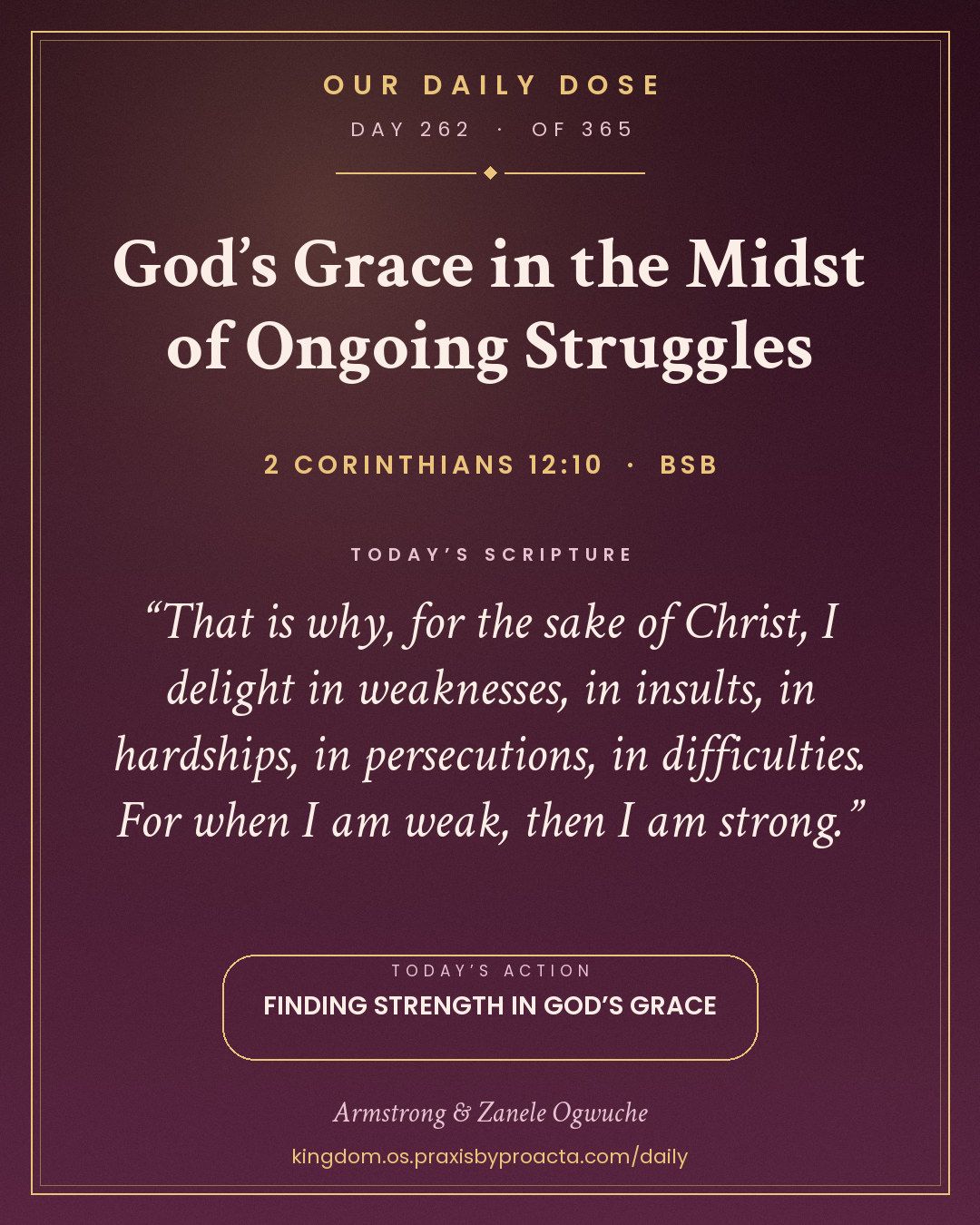
Scripture · 2 Corinthians 12:10
Berean Standard Bible (BSB), public domain.
As we reflect on the entire passage, we return to Paul’s conclusion that “when I am weak, then I am strong.” This powerful statement encapsulates the central message of the passage: that God’s grace is sufficient, and His power is made perfect in our weakness. Paul’s experience of the thorn in the flesh teaches us that ongoing struggles, far from being obstacles to faith, can become the very means by which we experience God’s sustaining grace and power.
Exegesis and Study
- The Paradox of Strength in Weakness: Paul’s statement that he delights in weaknesses and difficulties because they make him strong highlights a profound paradox at the heart of the Christian faith. In the world’s eyes, weakness is often seen as a flaw or a failing, but Paul reveals that it is precisely in our moments of weakness that God’s strength is most powerfully manifested. This is not because
weakness itself is inherently good, but because it creates space for God’s grace to work in ways that are beyond our human capacity.
- Enduring for Christ’s Sake: Paul’s willingness to endure suffering, not merely to tolerate it but to find delight in it, is deeply connected to his understanding that his suffering is “for Christ’s sake.” Paul views his hardships as opportunities to participate in the sufferings of Christ and to demonstrate the power of Christ in his life. This perspective transforms suffering from something to be avoided into a means of deepening his relationship with Christ and showcasing God’s power to others.
Practical Application
- Finding Strength in God’s Grace: Paul’s teaching encourages us to shift our focus from trying to eliminate all weakness and suffering in our lives to seeking God’s grace within them. This might involve actively looking for how God is working through our struggles, whether by strengthening our faith, developing our character, or using our experiences to minister to others. By embracing our weaknesses and depending on God’s grace, we can find strength that surpasses our own natural abilities.
- Embracing Suffering for Christ’s Sake: Paul’s attitude toward suffering challenges us to view our own difficulties through the lens of our relationship with Christ. Rather than seeing hardships as meaningless or as purely negative experiences, we can see them as opportunities to draw closer to Christ and to allow His strength to shine through us. This perspective can bring a sense of purpose and even joy in the midst of suffering, knowing that we are sharing in Christ’s mission and reflecting His power.
Prayer Guide
- Pray for Strength Through God’s Grace: Ask God to help you see His grace at work in your weaknesses and struggles. Pray for the ability to rely on His strength rather than your own and to trust that His power is being perfected in your life, even in the midst of difficulties.
- Pray for a Christ-Centered Perspective on Suffering: Reflect on your own experiences of suffering and hardship. Pray for the grace to view these experiences through the lens of your relationship with Christ, asking God to help you find purpose and strength in them, and to use them for His glory. Conclusion: Paul’s Thorn in the Flesh – A Testament to God’s Grace The passage in 2 Corinthians 12:1-10 provides profound insights into the nature of Christian suffering and the sufficiency of God’s grace. Paul’s experience of the thorn in the flesh, his repeated pleas for relief, and God’s response teach us that God’s grace is not just sufficient—it is transformative. In our weakest moments, God’s strength is revealed most clearly, and His power is made perfect. Paul’s willingness to boast in his weaknesses and to find delight in hardships offers a radical counter-narrative to the world’s understanding of strength and success. Rather than seeing suffering and weakness as barriers to God’s work in our lives, Paul shows us that they can be the very context in which God’s power is most fully displayed.
As we reflect on Paul’s thorn in the flesh, we are encouraged to embrace our own weaknesses and to depend on God’s grace in every situation. We are reminded that suffering, though painful, can serve a greater purpose in our spiritual growth and in the advancement of God’s Kingdom. By trusting in God’s sufficiency, we can find strength in the midst of weakness, hope in the midst of struggle, and joy in the knowledge that God’s grace is more than enough. May we, like Paul, learn to say with confidence, “For when I am weak, then I am strong,” and may we find peace and strength in the all-sufficient grace of our Lord Jesus Christ.
Read the full book in the KOS Library →
A daily devotional from KingdomOS. Share freely; every card links back here.