Water from the Rock
Exodus 17:1-7
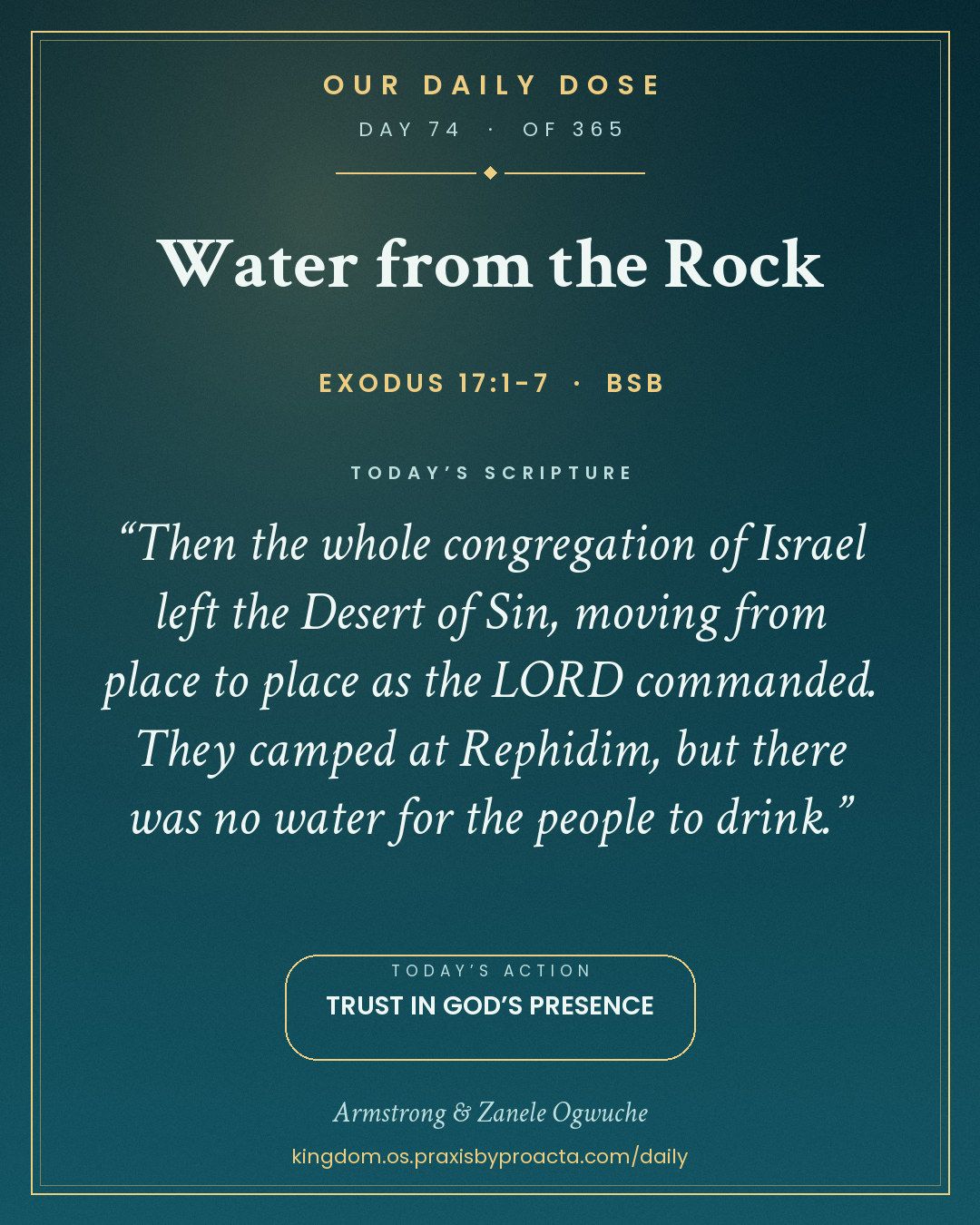
Scripture · Exodus 17:1-7
Berean Standard Bible (BSB), public domain.
As the Israelites move from the Desert of Sin to Rephidim, they once again face a dire need for water. At Rephidim, there is no water for the people to drink, and they begin to quarrel with Moses, accusing him of bringing them out of Egypt to die of thirst. The situation escalates as the people demand water, and Moses cries out to the Lord, fearing that the people are about to stone him. God instructs Moses to take the staff with which he struck the Nile and go to the rock at Horeb. There, God tells him to strike the rock, and when Moses does so, water miraculously flows out of it, providing for the needs of the people. This place is named Massah (which means “testing”) and Meribah (which means “quarreling”) because of the Israelites’ complaints and their testing of the Lord, asking, “Is the Lord among us or not?” (Exodus 17:7).
Exegetical Viewpoints
- God’s Provision in the Face of Doubt: The incident at Rephidim highlights the recurring theme of Israel’s doubt and God’s faithful provision. Despite the people’s grumbling and lack of faith, God once again provides for their needs, demonstrating His patience and mercy. The water from the rock is a powerful symbol of
God’s ability to bring life and sustenance out of seemingly barren and hopeless situations.
- Testing and Faith: The names Massah and Meribah serve as a reminder of the dangers of testing God through doubt and disobedience. The people’s question, “Is the Lord among us or not?” reflects a lack of trust in God’s presence and provision. This incident underscores the importance of maintaining faith, even when circumstances are challenging, and avoiding the temptation to test God’s faithfulness.
Practical Applications
- Trust in God’s Presence: When you find yourself in difficult or desperate situations, resist the urge to question God’s presence or care. Remember that God is always with you, even when the circumstances seem dire. Trust in His ability to provide for your needs, often in ways you could not have anticipated.
- Avoid Testing God: Reflect on areas in your life where you may be tempted to test God’s faithfulness by doubting His promises or His presence. Commit to walking in faith, trusting that God is with you and will provide for your needs according to His timing and wisdom.
Read the full book in the KOS Library →
A daily devotional from KingdomOS. Share freely; every card links back here.