Bitter Waters Made Sweet
Exodus 15:22-27
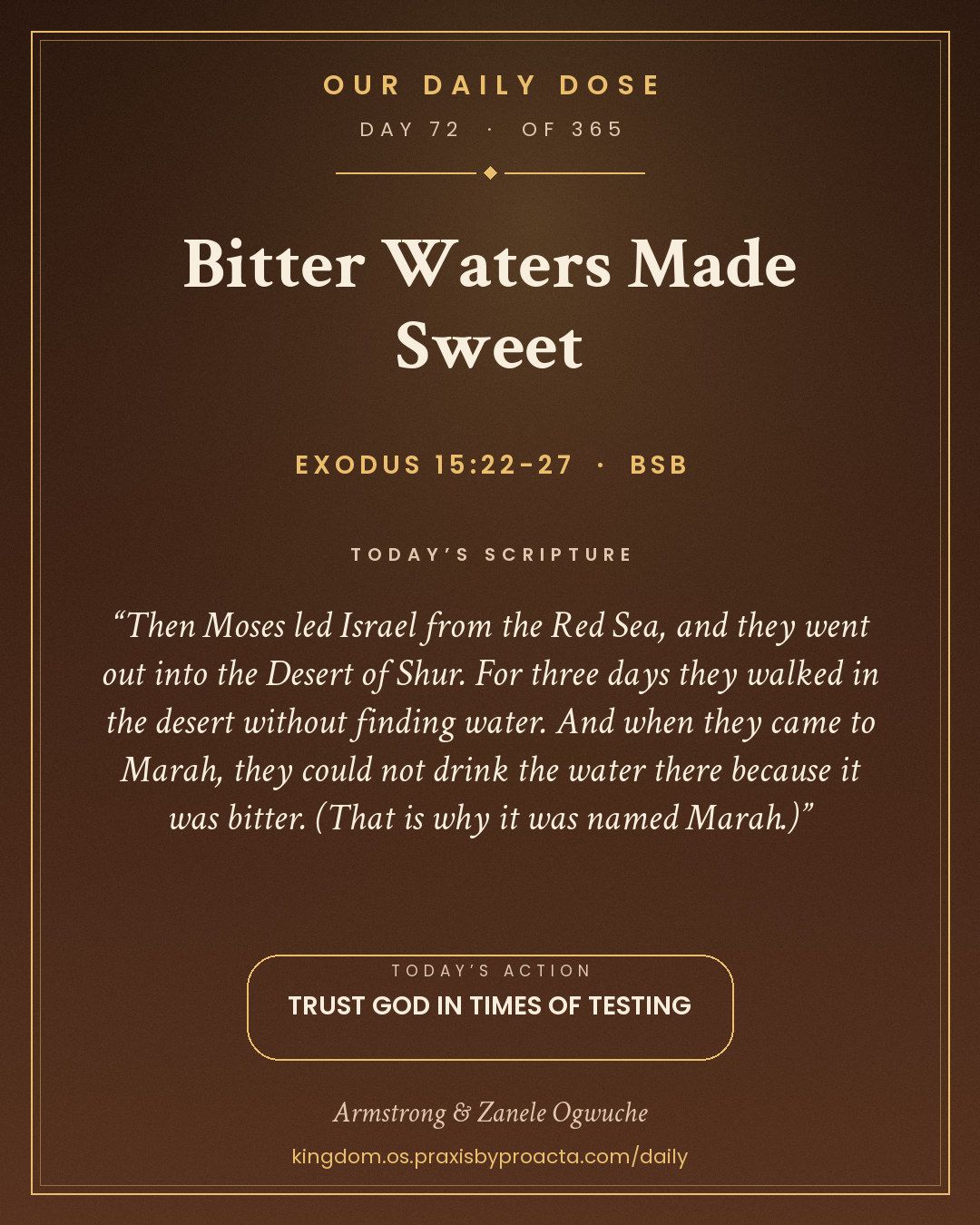
Scripture · Exodus 15:22-27
Berean Standard Bible (BSB), public domain.
Following the triumph at the Red Sea, the Israelites enter the wilderness of Shur, where they travel for three days without finding water. When they finally arrive at Marah, they discover that the water is bitter and undrinkable. The people begin to grumble against Moses, questioning why they were brought out of Egypt only to die of thirst in the desert. In response, Moses cries out to the Lord, who shows him a piece of wood. When Moses throws the wood into the water, it becomes sweet and drinkable. God then makes a decree and a promise to the Israelites: “If you listen carefully to the Lord your God and do what is right in his eyes, if you pay attention to his commands and keep all his decrees, I will not bring on you any of the diseases I brought on the Egyptians, for I am the Lord, who heals you” (Exodus 15:26).
Exegetical Viewpoints
- Testing and Provision: The episode at Marah is a test of the Israelites’ faith. Their immediate reaction to grumble reflects a lack of trust in God’s provision, despite the recent miraculous events. God’s response, however, is one of provision and healing, turning the bitter water sweet and revealing Himself as Jehovah Rapha, “the Lord who heals.”
- The Covenant of Obedience: God’s promise to protect and heal the Israelites is conditional upon their obedience. This reflects the covenantal relationship between God and His people, where blessings are tied to faithfulness. The incident serves as a reminder that trust in God’s provision must be accompanied by a commitment to live according to His commands.
Practical Applications
- Trust God in Times of Testing: When faced with challenges, resist the temptation to grumble or doubt God’s provision. Instead, cry out to Him in faith, trusting that He will provide what is needed, even in the most difficult circumstances.
- Embrace God’s Healing: Reflect on God’s identity as the healer. Whether you are facing physical, emotional, or spiritual challenges, trust in God’s ability to bring healing and restoration. Commit to living in obedience to His commands, recognizing that His blessings often flow from a life of faithfulness.
Read the full book in the KOS Library →
A daily devotional from KingdomOS. Share freely; every card links back here.