The Compassion of the Samaritan
Luke 10:33-35
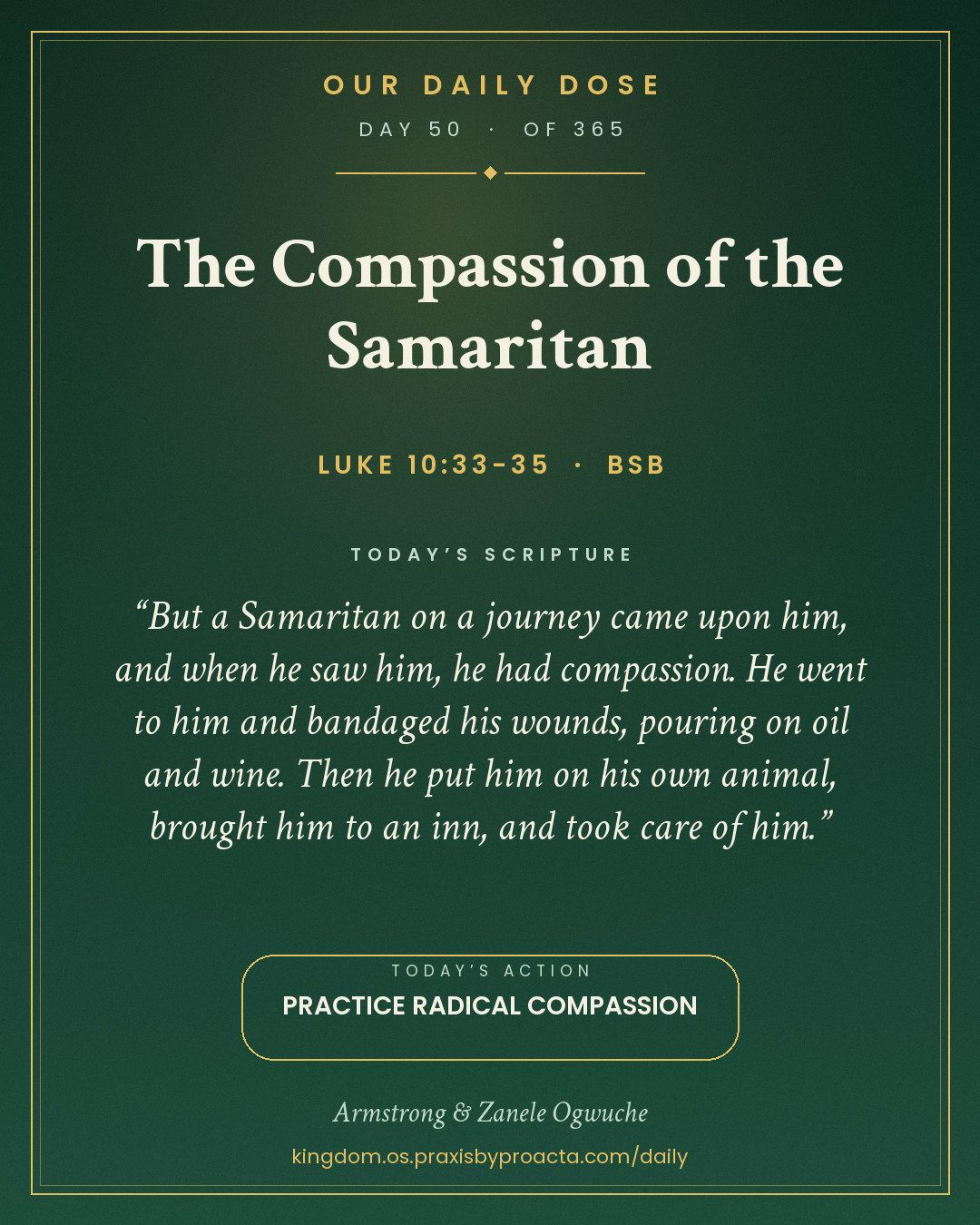
Scripture · Luke 10:33-35
Berean Standard Bible (BSB), public domain.
Jesus continues the parable by introducing a Samaritan, a figure who would have been despised and looked down upon by the Jewish audience. Unlike the priest and Levite, the Samaritan sees the wounded man and is moved with compassion. He goes to the man, bandages his wounds, pours on oil and wine, and then places him on his own donkey to take him to an inn where he can be cared for. The Samaritan even pays the innkeeper and promises to return to cover any additional costs. The actions of the Samaritan are a powerful demonstration of what it means to love one’s neighbor. His compassion is not limited by ethnic, religious, or social boundaries. Instead, it is driven by a deep sense of empathy and a willingness to go above and beyond to care for someone in need. The Samaritan’s actions stand in stark contrast to the indifference of the priest and Levite, highlighting that true neighborly love is shown through action and sacrifice.
Deeper Revelations
- Radical Compassion: The Samaritan’s willingness to help, despite the cultural enmity between Jews and Samaritans, exemplifies the radical nature of the love
that Jesus teaches. This love transcends social, ethnic, and religious divisions, focusing solely on the needs of the other person.
- Love in Action: The Samaritan’s response demonstrates that love is not just a feeling but an active commitment to the well-being of others. His actions involve significant personal sacrifice, both in terms of time and resources, showing that genuine love often requires us to go out of our way to help those in need.
Practical Applications
- Practice Radical Compassion: Consider how you can show love and compassion to those who are different from you or those whom society might overlook. Seek to break down barriers of prejudice and indifference, extending help to anyone in need, regardless of their background.
- Put Love into Action: Reflect on ways you can actively demonstrate love in your daily life. Look for opportunities to go the extra mile in helping others, whether through acts of kindness, offering support, or providing resources to those who are struggling.
Read the full book in the KOS Library →
A daily devotional from KingdomOS. Share freely; every card links back here.