Noah’s Legacy and the Continuation of the Human Story
Genesis 9:18-29
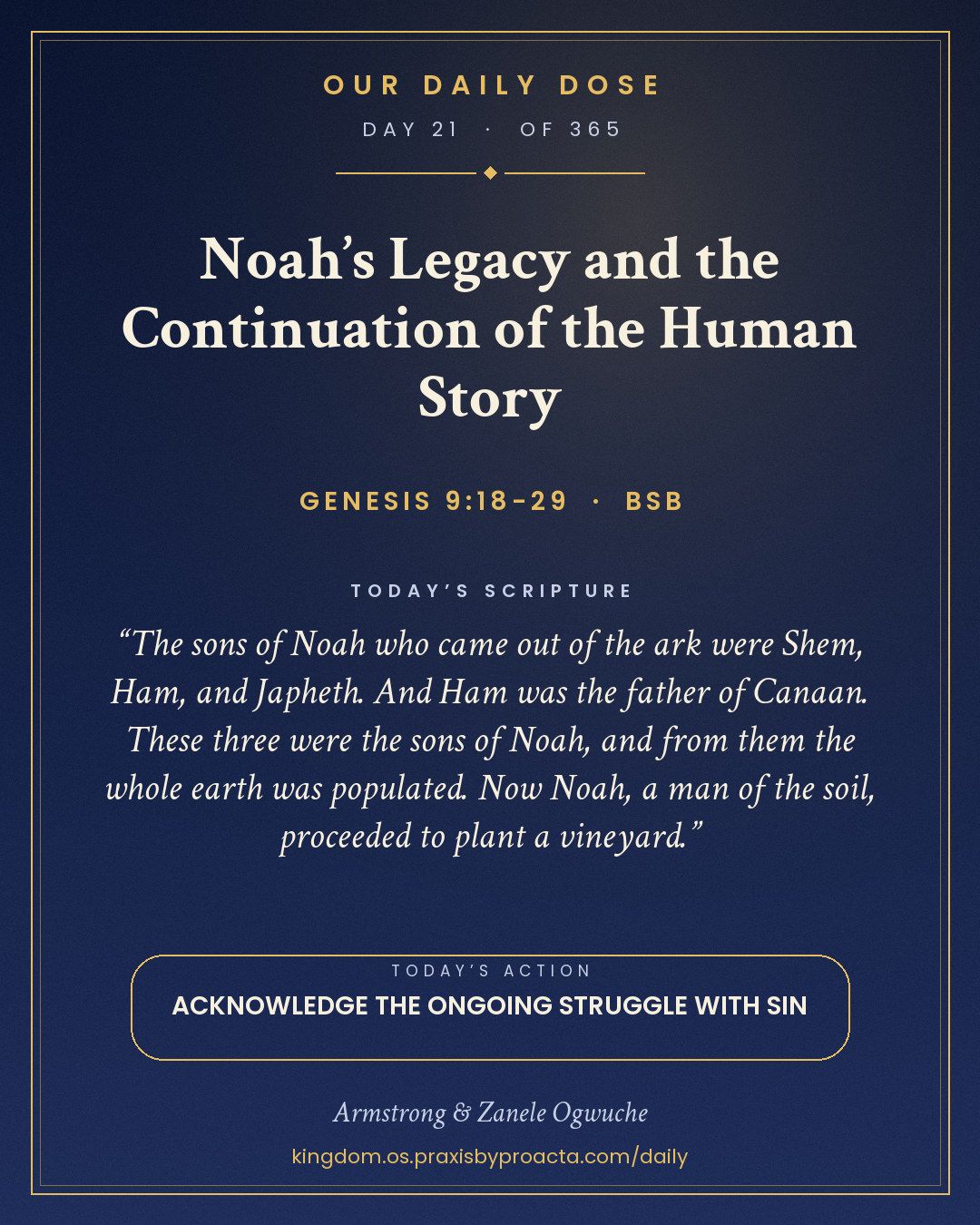
Scripture · Genesis 9:18-29
Berean Standard Bible (BSB), public domain.
The narrative of Noah concludes with a less familiar but significant episode: Noah’s vineyard, his drunkenness, and the actions of his sons, particularly Ham and his brothers, Shem and Japheth. This story, found in Genesis 9:18-29, highlights the ongoing challenges of human sinfulness even after the flood and the renewed earth. It also underscores the importance of family dynamics and the consequences of actions within the context of God’s covenant. The blessing of Shem and Japheth and the curse of Ham (specifically, Ham’s son Canaan) demonstrate the continuing influence of righteousness and unrighteousness in the post- flood world. Despite the flood’s purging of wickedness, the seeds of sin remain in humanity, showing that the ultimate solution to sin will not come through judgment alone but through redemption.
Deeper Revelations
- The Persistence of Sin: The post-flood episode with Noah’s sons reveals that sin is still present in the world, even after God’s judgment. This underscores the need for an internal transformation that goes beyond external judgment
—a transformation that will ultimately be fulfilled in Jesus Christ.
- The Importance of Honor and Respect: The story of Noah’s sons highlights the importance of honoring one’s parents and respecting family relationships. Ham’s dishonor brings consequences not only for himself but also for his descendants, illustrating the lasting impact of our actions on future generations.
Practical Applications
- Acknowledge the Ongoing Struggle with Sin: Recognize that even after experiencing God’s grace and deliverance, the struggle with sin continues. Stay vigilant in your spiritual walk, relying on God’s strength to overcome temptation and to live a life that honors Him.
- Honor Family Relationships: Reflect on the importance of respect and honor within your family. Seek to build relationships that are characterized by love, respect, and integrity, understanding that your actions can have a lasting impact on those around you. Conclusion: The Covenant with Noah The story of Noah and the covenant of the rainbow is a rich narrative that offers profound insights into God’s character, His justice, and His mercy. Over the course of these seven days, we have explored themes of righteousness, judgment, salvation, and covenant. Through Noah’s obedience, the ark becomes a symbol of God’s provision and protection, foreshadowing the ultimate salvation that would come through Jesus Christ.
The flood narrative reminds us of the seriousness of sin and the consequences it brings, but it also assures us of God’s unwavering commitment to His creation. The covenant of the rainbow is a promise that God’s mercy will prevail, and it invites us to live in the assurance of His grace. As we reflect on the covenant with Noah, let it deepen our understanding of God’s faithfulness and inspire us to live lives that are pleasing to Him. The story of Noah is not just a tale from the past; it is a powerful reminder of the ongoing story of redemption that God is writing in the world today—a story that each of us is invited to be a part of as we walk in faith and obedience to Him.
Week 4:
Abraham’s Call and Covenant The story of Abraham marks a significant turning point in the biblical narrative, as it introduces the concept of covenant in a profound and personal way. God’s call to Abraham (then Abram) and the subsequent covenants He establishes with him are foundational to understanding the relationship between God and His chosen people. Over the course of this week, we will explore Genesis 12, 15, and 17, focusing on the pivotal moments in Abraham’s life when God
reveals His promises and enters into covenant with him. These passages not only highlight God’s faithfulness but also provide profound lessons on faith, obedience, and the unfolding of God’s redemptive plan.
Read the full book in the KOS Library →
A daily devotional from KingdomOS. Share freely; every card links back here.