Expulsion from Eden and the Promise of Salvation
Genesis 3:20-24
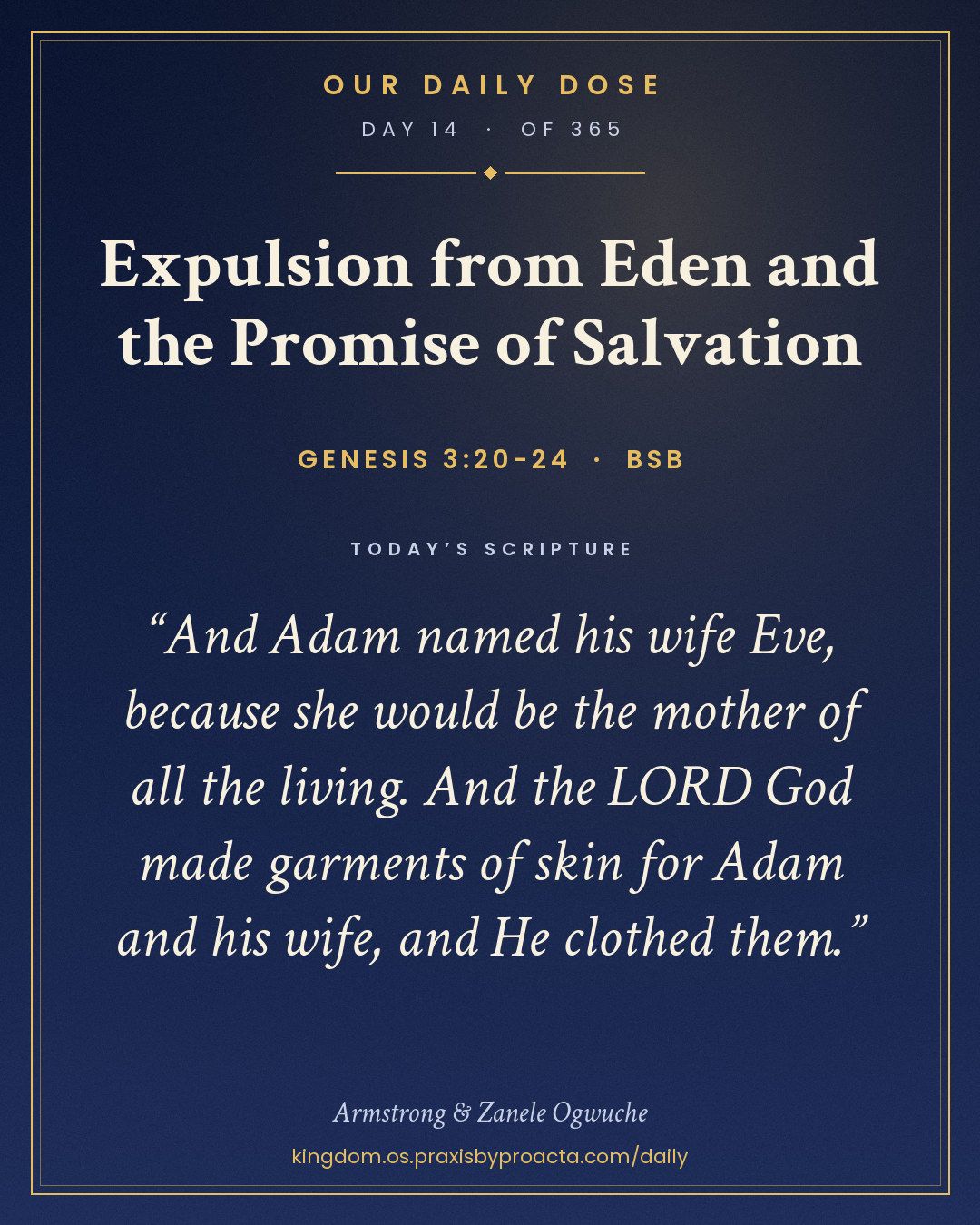
Scripture · Genesis 3:20-24
Berean Standard Bible (BSB), public domain.
The final part of Genesis 3 recounts the expulsion of Adam and Eve from the Garden of Eden. God clothes them with garments of skin, an act of mercy that provides protection and dignity in their fallen state (Genesis 3:21). However, they are also banished from Eden to prevent them from eating from the Tree of Life and living forever in their sinful condition (Genesis 3:22-24). God places cherubim and a flaming sword to guard the way to the Tree of Life. This expulsion is both an act of judgment and mercy. While Adam and Eve are expelled from the Garden of Eden, it is also a protective act by God. By preventing them from accessing the Tree of Life, God ensures that they do not live forever in a fallen, sinful state. This act foreshadows the eventual redemption and restoration that will come through Jesus Christ, who will reopen the way to eternal life. The garments of skin that God provides are symbolic of the covering that God Himself would provide through the sacrificial death of His Son. The cherubim and flaming sword guarding the way to the Tree of Life also symbolize the holiness of God and the severity of sin. Access to eternal life is not something that
humanity can achieve on its own; it is a gift that can only be received through God’s provision. Reflection and Application: The expulsion from Eden reminds us of the seriousness of sin and the consequences it brings, but it also points to God’s ongoing care and His ultimate plan for redemption. We can find comfort in knowing that, even when we face the consequences of our sins, God does not abandon us. Instead, He provides for us and prepares a way for our restoration. This passage encourages us to seek God’s mercy and to trust in His redemptive plan, knowing that through Christ, the way to eternal life has been reopened. Conclusion: The Fall and God’s Promise of Redemption The narrative in Genesis 3 is foundational to understanding the human condition and the overarching story of the Bible. It explains the origin of sin, suffering, and death, but it also introduces the first glimpse of hope—the promise of redemption through the seed of the woman. This week’s study highlights the gravity of sin and the consequences that follow, but it also reveals the depth of God’s grace and His unwavering commitment to redeeming His creation. As we reflect on the events of Genesis 3, we are reminded of our own need for redemption and the hope that is found in Jesus Christ. The story of the Fall is not just a distant event in the past; it is a reality that continues to affect our world today. Yet, in the midst of brokenness, we can hold onto the promise that God has provided a way of salvation through His Son.
Each day of this week’s study offers insights into the nature of temptation, the consequences of disobedience, and the hope of restoration. By understanding these truths, we are better equipped to navigate our own struggles with sin, to seek God’s forgiveness, and to live in the light of His redemptive work. As we journey through the rest of Scripture, the themes introduced in Genesis 3 will continue to unfold, leading us to a deeper appreciation of God’s plan for our salvation.
Week 3:
Covenant with Noah The narrative of Noah’s Ark and the covenant of the rainbow, found in Genesis 6-9, is one of the most well-known stories in the Bible. It is a story of judgment and salvation, of destruction and renewal, and ultimately, of God’s unwavering commitment to His creation. Over the course of seven days, this week’s study will delve into the profound theological themes, spiritual lessons, and deeper revelations found in the story of Noah. Through this exploration, we will gain insights into God’s character, His covenantal faithfulness, and the significance of the rainbow as a sign of hope and promise.
Read the full book in the KOS Library →
A daily devotional from KingdomOS. Share freely; every card links back here.