Christ’s Sacrificial Love
Romans 5:6-11
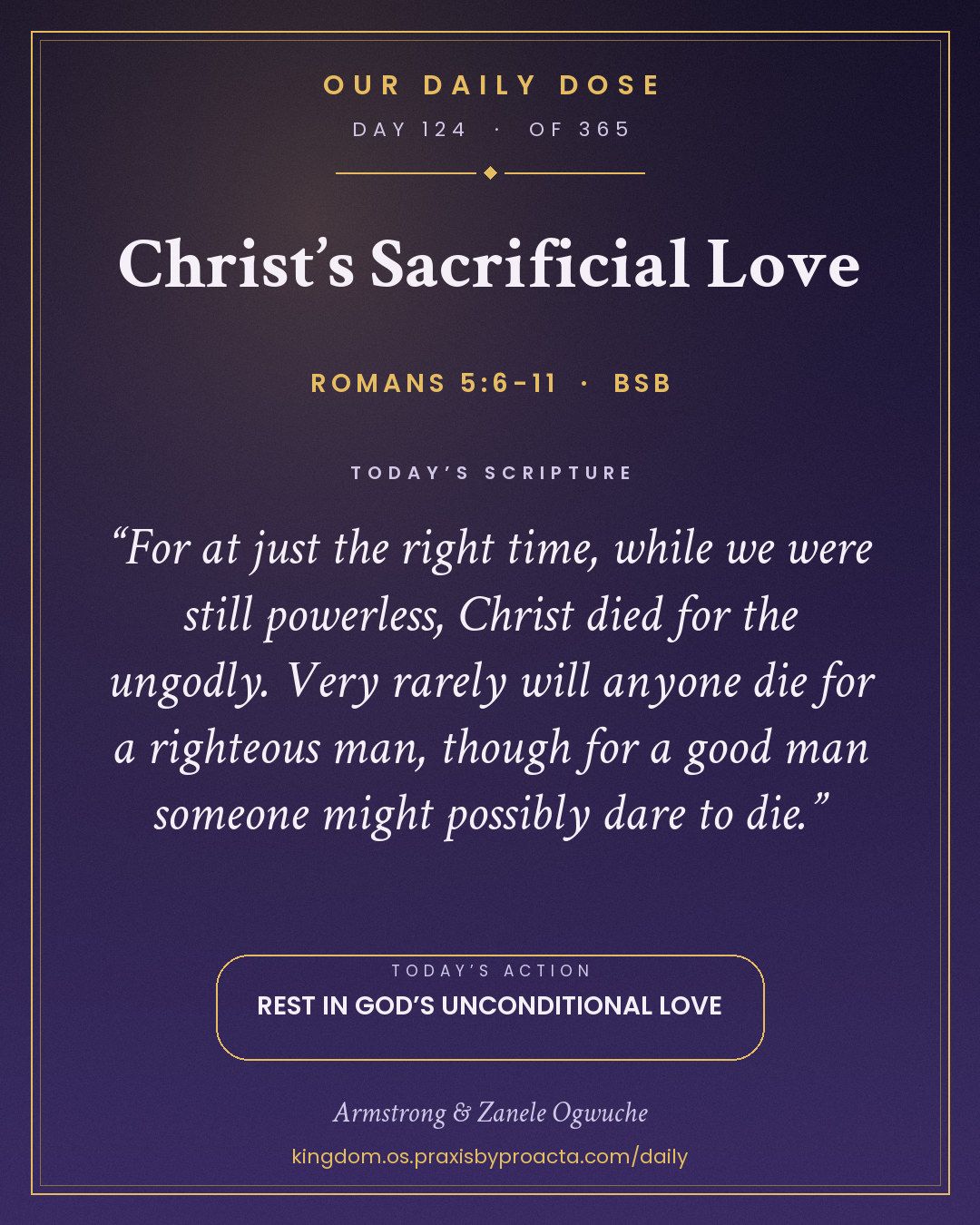
Scripture · Romans 5:6-11
Berean Standard Bible (BSB), public domain.
The culmination of Paul’s argument in this passage is the demonstration of God’s love through the death of Christ: “You see, at just the right time, when we were still powerless, Christ died for the ungodly” (Romans 5:6). Paul emphasizes that Christ’s death was not for the righteous or deserving but for those who were powerless, ungodly, and sinners. This ultimate act of grace is the clearest expression of God’s love, a love that does not wait for humanity to become worthy but reaches out to them in their unworthiness. Paul contrasts human love, which might lead someone to die for a righteous person, with God’s love, which led Christ to die for sinners. “But God demonstrates his own love for us in this: While we were still sinners, Christ died for us” (Romans 5:8). This sacrificial love is the foundation of the believer’s justification and reconciliation with God. Paul concludes by highlighting the security that believers have in Christ: “Since we have now been justified by his blood, how much more shall we be saved from God’s wrath through him!” (Romans 5:9). This assurance extends beyond the present, promising that those who have been reconciled to God through Christ’s death will also be saved by His life.
Exegetical Viewpoints
- God’s Unconditional Love: The love of God, as demonstrated in Christ’s death, is unconditional and unmerited. It is offered to humanity at their worst—when they are powerless, ungodly, and sinners. This love is the essence of grace, given freely and without regard to human worthiness.
- Reconciliation and Salvation: Paul’s emphasis on reconciliation highlights the relational aspect of salvation. Through Christ’s death, the enmity between humanity and God is removed, and believers are brought into a restored relationship with God. This reconciliation is both a present reality and a promise of future salvation.
Practical Applications
- Rest in God’s Unconditional Love: Take time to reflect on the depth of God’s love for you, as demonstrated in Christ’s sacrificial death. Understand that this love is not based on your performance or worthiness but is a gift of grace. Let this assurance bring you peace and confidence in your relationship with God.
- Live in the Assurance of Salvation: Allow the assurance of your salvation, rooted in Christ’s death and resurrection, to shape your daily life. Trust in the security that comes from being justified and reconciled to God, and let this confidence empower you to live boldly for Him. Conclusion: The Ultimate Act of Grace in Romans 5:1-11 Romans 5:1-11 is a profound exploration of the ultimate act of grace—Christ’s death for sinners. In these verses, Paul outlines the incredible benefits that flow from this act of
grace: justification, peace with God, access to grace, hope in the glory of God, and the assurance of salvation. Through Christ’s sacrificial love, believers are not only forgiven but also brought into a reconciled relationship with God, filled with hope and empowered by the Holy Spirit. As we reflect on this passage, we are reminded that our faith is grounded not in our own efforts but in the unparalleled grace of God. This grace calls us to live in peace, to rejoice in hope, and to embrace the love that has been poured out into our hearts. The death of Christ is the ultimate demonstration of God’s love, and it invites us to respond with gratitude, trust, and a commitment to live out the implications of this grace in every area of our lives. May this week’s study inspire us to rest in the assurance of God’s love, to find strength in the hope that comes from our reconciliation with Him, and to live each day as a reflection of the grace that has been so generously given to us.
May The Power of Prayer
Theme: Developing a powerful prayer life.
Week 21: Day 125-131 The Prayer of Jabez
The Prayer of Jabez, found in 1 Chronicles 4:9-10, is one of the most intriguing and brief yet profound prayers in the Bible. Tucked away in a genealogy, Jabez’s simple but earnest plea to God for blessing, expansion, protection, and freedom from pain has resonated with countless believers over the centuries. His prayer reflects a deep trust in God’s power to transform lives and circumstances. Over the course of this week, we will explore each aspect of Jabez’s prayer, reflecting on its meaning, significance, and how it can inspire our own prayer lives.
Read the full book in the KOS Library →
A daily devotional from KingdomOS. Share freely; every card links back here.