Reflecting on Mercy and Forgiveness
John 8:1-11
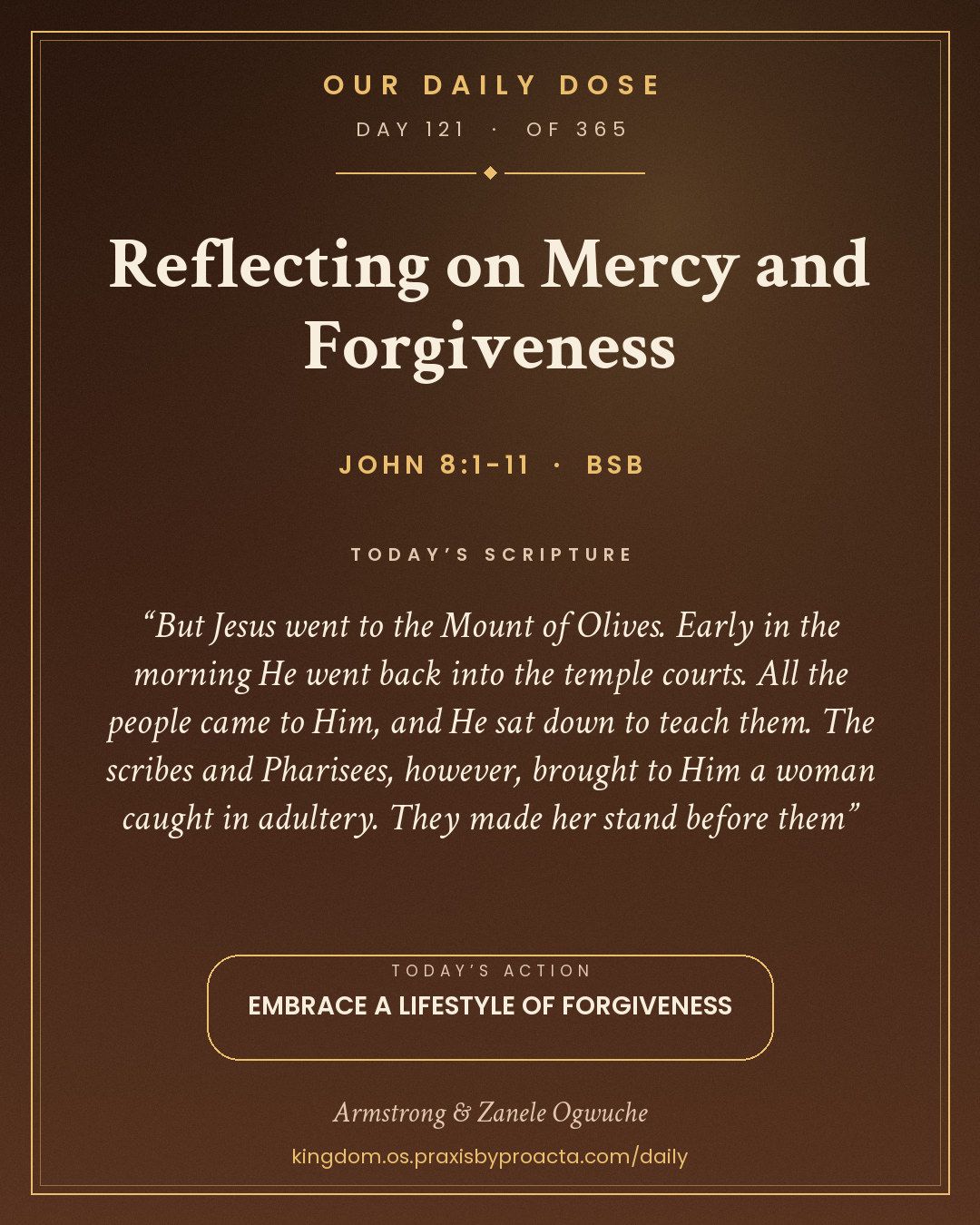
Scripture · John 8:1-11
Berean Standard Bible (BSB), public domain.
As we conclude this week’s study of John 8:1-11, it is important to reflect on the overarching themes of mercy and forgiveness that are central to this passage. The story of the adulterous woman is a powerful reminder that Jesus’ ministry was marked by a radical grace that transcends legalism and judgment. His interaction with the woman offers a model for how we are to approach sin, both in ourselves and in others: with a balance of truth and grace, mercy and justice. Jesus’ refusal to condemn the woman, despite her guilt, challenges us to consider how we respond to the sins and failures of those around us. Are we quick to judge and condemn, or do we, like Jesus, seek to extend mercy and offer the hope of transformation? The call to “go and sin no more” is not just for the woman but for all of us, as we are invited to live in the light of God’s grace and to extend that grace to others.
Exegetical Viewpoints
- The Transformative Power of Mercy: The mercy that Jesus extends to the woman is not a passive overlooking of sin but an active invitation to transformation. This highlights the transformative power of mercy—when we
are forgiven, we are also called to change, to leave behind the patterns of sin and live in the new life that Jesus offers.
- Forgiveness as a Way of Life: The story encourages us to adopt forgiveness as a fundamental aspect of our lives. Forgiveness is not a one-time act but a continuous way of living that shapes our relationships and our interactions with others. By embracing forgiveness, we reflect the heart of God and participate in His redemptive work in the world.
Practical Applications
- Embrace a Lifestyle of Forgiveness: Make forgiveness a central part of your life. This means not only seeking forgiveness from God and others but also extending it to those who have wronged you. Let forgiveness shape your relationships, allowing it to foster healing, reconciliation, and peace.
- Live Out the Call to Transformation: Respond to God’s mercy by committing to a life of transformation. Seek to leave behind patterns of sin and embrace the new life that Jesus offers. Let the mercy you have received empower you to live differently, reflecting the love and grace of God in all that you do. Conclusion: Jesus’ Mercy and Forgiveness in John 8:1-11 The story of Jesus and the adulterous woman is a profound illustration of the mercy and forgiveness that are at the heart of the Christian faith. In this passage, we see Jesus challenging the legalism and hypocrisy of the religious leaders, offering instead a vision of grace that is transformative and inclusive. Jesus’ refusal to condemn the
woman, coupled with His call for her to “go and sin no more,” encapsulates the balance of mercy and truth that defines His ministry. As we reflect on this story, we are called to embody the same mercy and forgiveness in our own lives. This means recognizing our own need for grace, extending that grace to others, and living in a way that reflects the transformative power of God’s love. The story of the adulterous woman reminds us that no one is beyond the reach of God’s mercy and that, in Christ, we are all offered the opportunity for a new beginning. May this week’s study inspire us to live out the mercy and forgiveness of Jesus, both in how we relate to others and in how we respond to the grace we have received. Let us be people who, like Jesus, choose mercy over condemnation and who seek to build communities that are grounded in grace and love.
Week 20: Day 122-124 The Ultimate Act of Grace The concept of grace is central to the Christian faith, and nowhere is this more profoundly illustrated than in the sacrificial death of Jesus Christ. In Romans 5:1-11, the Apostle Paul presents the ultimate act of grace: Christ dying for us while we were still sinners. This passage offers a powerful and transformative understanding of God’s love, the justification of believers, and the hope that flows from the death and resurrection of Jesus. Throughout this week, we will delve into these verses to explore the depth of God’s grace and the implications it has for our lives as believers.
Read the full book in the KOS Library →
A daily devotional from KingdomOS. Share freely; every card links back here.