Our Daily Dose
Day 117 of 365 · Week 17 · Stories of Forgiveness
◆
Jesus’ Response
John 8:6-9
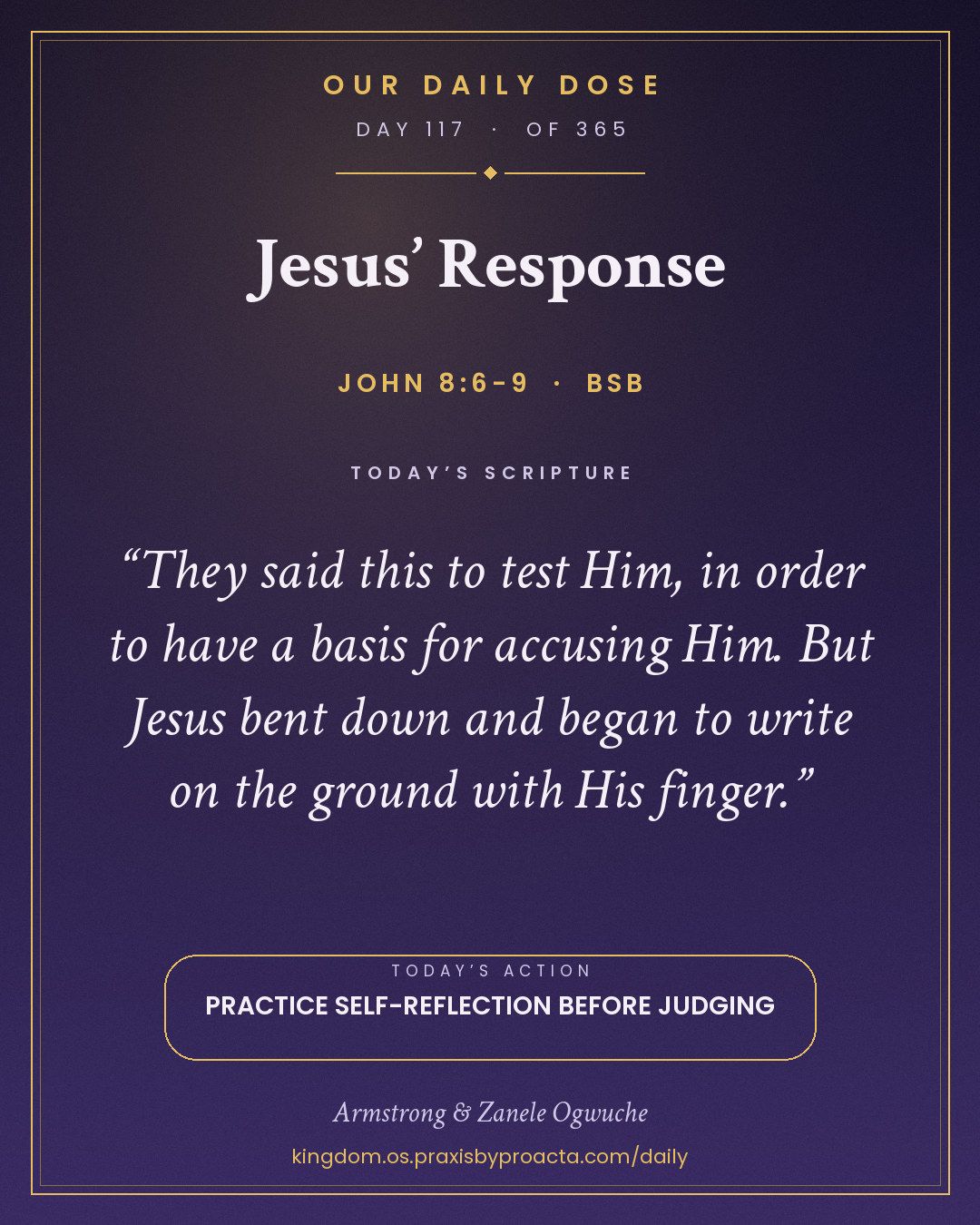
Scripture · John 8:6-9
6They said this to test Him, in order to have a basis for accusing Him. But Jesus bent down and began to write on the ground with His finger. 7When they continued to question Him, He straightened up and said to them, “Let him who is without sin among you be the first to cast a stone at her.” 8And again He bent down and wrote on the ground. 9When they heard this, they began to go away one by one, beginning with the older ones, until only Jesus was left, with the woman standing there.
Berean Standard Bible (BSB), public domain.
Rather than answering the Pharisees directly, Jesus does something unexpected—He bends down and writes on the ground with His finger. When they continue to question Him, He stands up and says, “Let any one of you who is without sin be the first to throw a stone at her” (John 8:7). He then stoops down again and continues writing on the ground. One by one, the accusers begin to leave, starting with the oldest, until only Jesus and the woman are left.
Exegetical Viewpoints
- Jesus’ Writing on the Ground: The act of writing on the ground is a mysterious one, and the text does not specify what Jesus wrote. Some scholars suggest that He may have been writing the sins of the accusers, a list of commandments, or a symbolic act referencing divine judgment. Regardless of what He wrote, the action serves to de-escalate the situation and shifts the focus from the woman’s sin to the sinfulness of her accusers.
- Without Sin: Jesus’ statement, “Let any one of you who is without sin be the first to throw a stone,” challenges the Pharisees to examine their own lives before passing judgment on others. It is a powerful reminder that all have sinned and that none are in a position to condemn others without acknowledging their own need for mercy.
Practical Applications
- Practice Self-Reflection Before Judging: Before judging or condemning others, take time to reflect on your own shortcomings and sins. Recognize that you, too, are in need of God’s grace and mercy. This self-reflection can lead to a more compassionate and understanding approach to others.
- Respond with Wisdom: In difficult situations, consider how you can respond with wisdom rather than react impulsively. Jesus’ response to the Pharisees was not only wise but also disarming, revealing the truth in a way that led to conviction and self-examination. Seek to respond to challenges in a way that reflects God’s wisdom and grace.
This devotional is one day from Our Daily Dose, a 365-day journey through Scripture by Armstrong & Zanele Ogwuche.
Read the full book in the KOS Library →
Read the full book in the KOS Library →
Scripture is shown in public-domain translations, so you can share it freely. The study text is from Our Daily Dose by Armstrong & Zanele Ogwuche.
A daily devotional from KingdomOS. Share freely; every card links back here.
A daily devotional from KingdomOS. Share freely; every card links back here.